Introduction
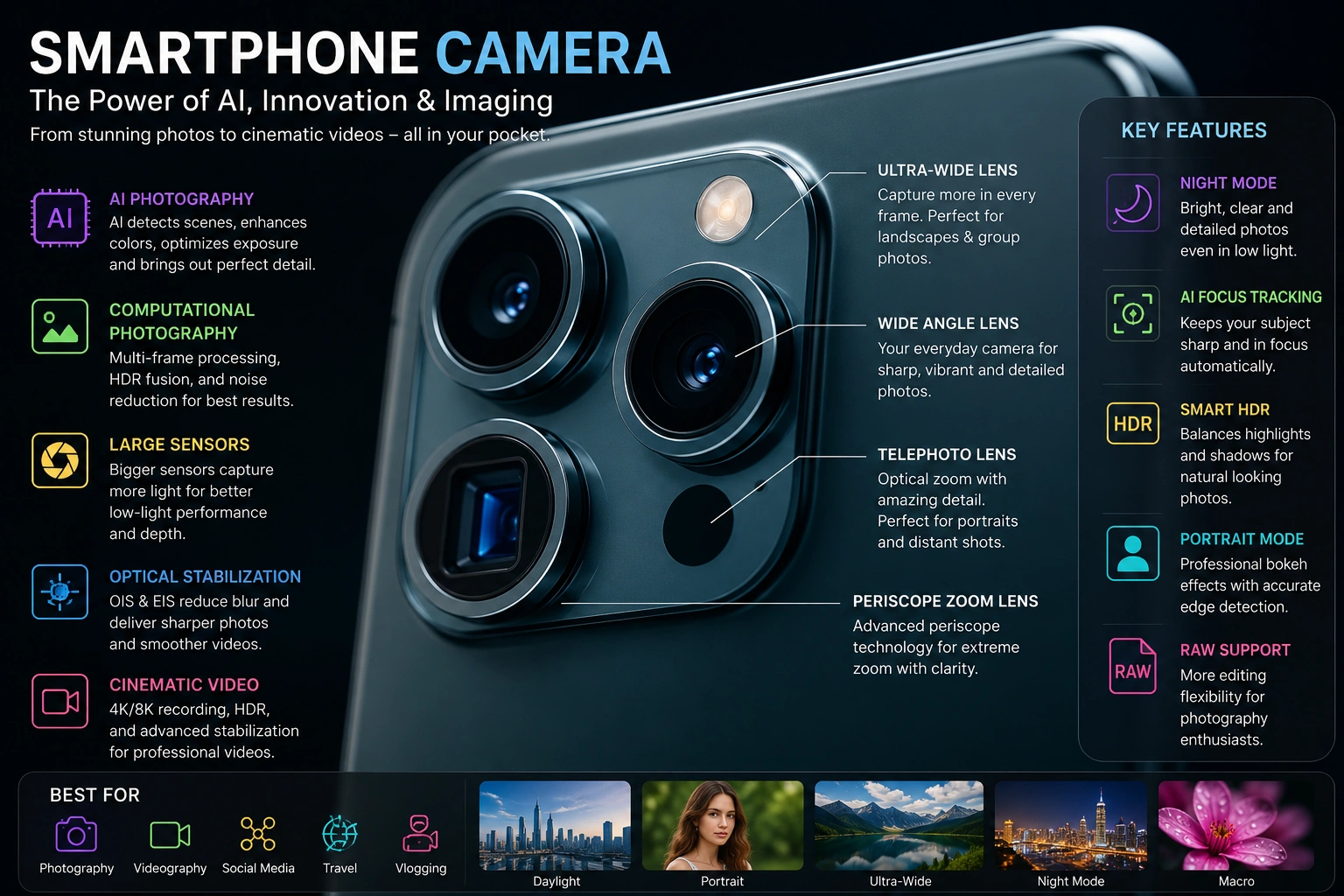
Smartphone cameras have Transformed the way people capture memories, create content, and communicate online. In 2026, mobile photography is no longer just about taking casual photos. Modern smartphone cameras now use advanced AI imaging, computational photography, real-time HDR processing, and cinematic video stabilization to deliver professional-looking results directly from a pocket-sized device.
For users across the USA, UK, Germany, France, Spain, Italy, and the rest of Europe, smartphone cameras have become essential tools for social media creation, travel photography, remote work, digital marketing, and even filmmaking. Whether someone is uploading TikTok videos, shooting YouTube Shorts, capturing family vacations, or building a personal brand on Instagram, camera quality now influences smartphone buying decisions more than ever before.
The biggest shift in recent years is that megapixels alone no longer define image quality. Instead, AI-powered image processing, larger sensors, better optics, computational photography, and smarter video engines determine how good smartphone photos and videos truly look.
This complete guide explains how smartphone cameras work in 2026, the latest AI photography trends, the best camera technologies to look for, and how to choose the perfect camera phone for photography, video creation, and social media content.
What Are Smartphone Cameras?
Smartphone cameras are compact digital imaging systems integrated into mobile phones. Unlike traditional cameras, smartphone cameras combine hardware and software processing to create high-quality images.
Modern smartphones usually include multiple camera lenses, such as:
- Wide camera
- Ultra-wide camera
- Telephoto camera
- Periscope zoom lens
- Macro camera
- Depth sensor
The real magic happens through computational photography and AI image processing. Instead of relying only on lens quality, smartphones use machine learning and neural processing to improve lighting, color accuracy, dynamic range, and detail.
Today’s flagship smartphones can compete with entry-level DSLR cameras in many real-world situations.
How Smartphone Cameras Work
Understanding how smartphone cameras work helps buyers make smarter decisions beyond marketing hype.
Camera Sensors
The sensor is the most important part of a smartphone camera. It captures light and converts it into digital information.
Larger sensors generally produce:
- Better low-light performance
- More natural depth
- Improved detail
- Reduced noise
- Better dynamic range
Many premium smartphones now use 1-inch sensors, dramatically improving mobile photography quality.
Image Signal Processor
The ISP processes raw image data captured by the sensor. Modern ISPs use AI algorithms to optimize:
- Exposure
- Sharpness
- Color science
- HDR
- Noise reduction
- White balance
Without advanced image processing, even a high-end sensor cannot deliver excellent results.
AI Photography
Uses machine learning to automatically improve photos.
Camera systems can:
- Detect scenes instantly
- Improve portraits
- Enhance skies
- Optimize skin tones
- Reduce motion blur
- Improve night photography
AI imaging has become the backbone of flagship smartphone photography in 2026.
Computational Photography Explained
Computational photography combines multiple images and AI processing to create one optimized final photo.
Key technologies include:
- HDR stacking
- Semantic segmentation
- Multi-frame processing
- AI sharpening
- Real-time tone mapping
- Image fusion
Modern smartphones often capture multiple frames instantly before producing the final image.
Lens Systems
Most flagship phones use multiple specialized lenses for different situations.
| Lens Type | Purpose |
| Wide Lens | Everyday photography |
| Ultra-Wide Lens | Landscapes & travel |
| Telephoto Lens | Optical zoom |
| Periscope Lens | Long-distance zoom |
| Macro Lens | Close-up photography |
| Depth Sensor | Portrait effects |
Optical Image Stabilization
OIS reduces camera shake for:
- Sharper photos
- Better night photography
- Smoother videos
- Improved cinematic recording
This feature is especially important for creators and vloggers.
Why Megapixels No Longer Matter in 2026
One of the biggest misconceptions in mobile photography is that more megapixels automatically mean better camera quality.
In reality, smartphone imaging quality depends more on:
- Sensor size
- AI processing
- Lens quality
- HDR performance
- Pixel size
- Computational photography
A 50MP camera with a larger sensor can outperform a 200MP camera with poor processing.
Pixel Binning
Modern smartphones combine multiple pixels into one larger virtual pixel.
Benefits include:
- Better night photography
- Improved detail
- Lower image noise
- Better color accuracy
This is why modern 48MP or 200MP sensors often output 12MP photos.
HDR Fusion
HDR fusion blends multiple exposures into one image.
This improves:
- Highlights
- Shadows
- Dynamic range
- Sky detail
- Indoor lighting balance
Flagship smartphones now perform HDR processing in real time.
Real-World Example
A phone with:
- Larger sensor
- Better ISP
- Advanced AI processing
Will often outperform a phone with more megapixels but weaker computational photography.
This is why many professional reviewers prioritize image processing over raw megapixel counts.
Computational Photography Explained
Computational photography is the defining technology behind modern smartphone cameras.
HDR Stacking
Smartphones capture multiple exposures instantly and merge them.
Benefits:
- Balanced highlights
- Better shadows
- Improved contrast
- More realistic scenes
AI Night Mode
Night mode uses long exposures combined with AI stabilization.
Modern flagship phones can now:
- Brighten dark scenes
- Preserve detail
- Reduce noise
- Improve handheld low-light photography
Night photography has improved dramatically since 2023.
Image Fusion
Image fusion combines data from multiple lenses and frames.
This helps create:
- Sharper zoom images
- Better portraits
- Cleaner textures
- More accurate lighting
Semantic Segmentation
AI identifies different elements inside a photo:
- Sky
- Skin
- Hair
- Buildings
- Food
- Backgrounds
The smartphone then optimizes each area individually.
AI Portrait Effects
Modern portrait modes now use neural depth mapping for:
- Better edge detection
- More natural blur
- Studio lighting simulation
- Professional-looking portraits
Types of Smartphone Camera Lenses
Different lenses serve different photography needs.
Wide Lens
The main camera lens handles most photography situations.
Best for:
- Everyday photography
- Portraits
- Food photography
- Street photography
Ultra-Wide Lens
Ultra-wide cameras capture larger scenes.
Perfect for:
- Landscapes
- Architecture
- Group photos
- Travel content
Telephoto Lens
Telephoto lenses provide optical zoom without quality loss.
Useful for:
- Wildlife
- Sports
- Concert photography
- Portrait compression
Periscope Zoom Lens
Periscope systems use folded optics for extreme zoom ranges.
Modern flagship phones now offer:
- 5x optical zoom
- 10x hybrid zoom
- AI-enhanced digital zoom
Periscope cameras are becoming essential in premium smartphones.
Macro Lens
Macro lenses focus on tiny details.
Best for:
- Flowers
- Textures
- Product photography
- Insects
Depth Sensors
Depth sensors improve portrait mode accuracy.
They help separate subjects from backgrounds more naturally.
Best Smartphone Cameras for Photography in 2026
Different users need different camera strengths.
Best for Portrait Photography
Ideal features:
- Accurate skin tones
- Natural background blur
- AI face optimization
- Strong edge detection
Portrait photographers should prioritize sensor quality and AI portrait processing.
Zoom Photography
Look for:
- Periscope zoom
- Optical stabilization
- Hybrid AI zoom
- Multi-frame zoom fusion
Zoom photography has become a major differentiator among flagship phones.
Low-Light Photography
Important features:
- Large sensors
- Night mode
- AI stabilization
- Computational exposure stacking
Low-light performance matters greatly for travel and indoor photography.
Smartphone Cameras for Creators
Content creators need:
- Stable video
- Accurate autofocus
- High bitrate recording
- Good front cameras
- HDR video
Social media creators increasingly choose phones based on video quality rather than photo quality alone.
Smartphone Cameras for Cinematic Video
Modern smartphones now support:
- 4K HDR recording
- Cinematic blur
- LOG video
- Dolby Vision
- Advanced stabilization
Some smartphones now rival professional mirrorless cameras for short-form content.
Smartphone Cameras vs DSLR Cameras
Many people wonder whether smartphones can fully replace DSLR cameras.
Smartphone Camera Advantages
| Smartphone Cameras | Benefits |
| AI Processing | Better automatic optimization |
| Portability | Always available |
| Instant Editing | Fast social sharing |
| Computational HDR | Superior dynamic balancing |
| AI Stabilization | Excellent handheld video |
DSLR Camera Advantages
| DSLR Cameras | Benefits |
| Larger Sensors | Better depth & detail |
| Interchangeable Lenses | Greater flexibility |
| Optical Physics | Superior natural image quality |
| Professional Controls | Advanced manual shooting |
| Better RAW Editing | More editing flexibility |
Which Is Better?
For casual users and creators:
- Smartphones are often enough
For professional photographers:
- DSLRs and mirrorless cameras still offer superior optical performance
However, smartphone cameras continue to improve rapidly through AI advancements.
Best Smartphone Camera Features To Look For
Choosing the right smartphone camera involves more than checking megapixels.
Sensor Size
Larger sensors improve:
- Low-light performance
- Dynamic range
- Natural blur
- Detail retention
Optical Zoom
Optical zoom preserves image quality better than digital zoom.
Periscope zoom systems are now a major flagship feature.
Stabilization
Look for:
- Optical Image Stabilization (OIS)
- Sensor-shift stabilization
- Electronic stabilization
This is critical for video creators.
RAW Photography Support
RAW support allows advanced editing flexibility.
Professional creators prefer smartphones with strong RAW processing.
AI Image Processing
Modern AI photography improves:
- Exposure
- Portraits
- Color science
- Motion handling
- Night photography
Video Bitrate & Frame Rate
Creators should look for:
- 4K 60fps
- 8K support
- High bitrate recording
- LOG recording
- HDR video
How We Tested Smartphone Cameras
Transparency builds trust, and testing methodology matters.
Daylight Photography Tests
We evaluated:
- Sharpness
- Color accuracy
- Dynamic range
- Detail retention
Portrait Photography Tests
We checked:
- Skin tones
- Hair separation
- Edge detection
- Background blur quality
Night Photography Tests
Testing included:
- Noise reduction
- Exposure control
- Motion handling
- AI enhancement
Zoom Performance Tests
We compared:
- Optical zoom
- Hybrid zoom
- Digital zoom clarity
- Stabilization
Video Recording Tests
Video testing focused on:
- Stabilization
- Autofocus
- Exposure transitions
- Audio quality
- HDR video
Social Media Upload Quality
We also evaluated how photos and videos appear after uploading to:
- TikTok
- YouTube Shorts
Compression handling is extremely important for creators.
Smartphone Camera Trends in 2026
The smartphone camera industry is evolving faster than ever.
AI-Generated Photography
AI now helps create:
- Enhanced skies
- AI relighting
- Generative fill
- Object removal
- Scene optimization
Real-Time HDR Processing
HDR processing now happens instantly while previewing scenes.
This improves exposure accuracy before capturing photos.
Computational Zoom
AI-enhanced zoom systems use multi-frame reconstruction for cleaner long-range images.
1-Inch Smartphone Sensors
Larger sensors dramatically improve:
- Low-light photography
- Natural depth
- Dynamic range
Many flagship devices now use near-professional sensor sizes.
Variable Aperture Technology
Variable apertures adjust light intake automatically.
Benefits include:
- Better daylight sharpness
- Improved night photography
- More flexible exposure control
Neural Image Processing
Neural processors optimize:
- Texture rendering
- Skin tones
- Scene recognition
- Motion correction
AI imaging will dominate smartphone photography moving forward.
Future of Smartphone Cameras
The future of smartphone photography looks extremely advanced.
AI Cinematography
AI-assisted video systems may soon:
- Track subjects automatically
- Adjust lighting in real time
- Simulate cinematic camera movements
Real-Time Scene Reconstruction
Future smartphones could generate 3D scene maps for advanced photography effects.
Neural Rendering
AI rendering may eventually create near-photorealistic enhancements instantly.
AR Photography
Augmented reality photography will likely merge digital objects with real-world environments seamlessly.
3D Imaging
Depth mapping and LiDAR technologies are improving rapidly.
This could revolutionize:
- Gaming
- Virtual production
- Real estate imaging
- Social media content
Satellite-Assisted Imaging
Future systems may use satellite positioning and environmental mapping for advanced photography optimization.
Smartphone Camera Buying Guide
Choosing the best smartphone camera depends on your needs.
| User Type | Best Camera Features |
| Casual Users | Good HDR & AI processing |
| Travelers | Ultra-wide & stabilization |
| Creators | Strong video & front camera |
| Photographers | Large sensor & RAW support |
| TikTok Creators | Stabilization & portrait video |
| YouTubers | Cinematic recording & autofocus |
What Creators Should Prioritize
TikTok Creators
Look for:
- Stabilization
- Vertical video optimization
- AI beauty processing
- Smooth autofocus
Instagram Photographers
Important features include:
- Dynamic range
- Portrait quality
- Color science
- HDR optimization
YouTube Creators
Prioritize:
- Audio recording
- 4K video
- Long recording stability
- Cinematic modes
Pros & Cons of Smartphone Cameras
Pros
- Portable and convenient
- AI-enhanced photography
- Excellent social media integration
- Powerful video stabilization
- Instant editing and sharing
- Computational photography advantages
Cons
- Smaller sensors than DSLRs
- Limited optical physics
- Digital zoom limitations
- Battery drain during heavy recording
- Heat management issues during 4K/8K video
Europe-Focused Smartphone Photography Trends
Across Europe, smartphone photography trends vary by lifestyle and content creation habits.
- Travelers in Italy and Spain prioritize ultra-wide photography.
- UK creators focus heavily on TikTok and YouTube Shorts video quality.
- German users often prioritize RAW support and manual controls.
- Scandinavian users value low-light photography due to darker winter environments.
European content creators increasingly choose smartphones capable of professional-level video recording for social-first workflows.
Tips to Improve Smartphone Photography
Use Natural Lighting
Good lighting dramatically improves smartphone photos.
Clean the Lens
Dirty lenses reduce sharpness and contrast.
Use Grid Lines
Grid lines improve composition accuracy.
Avoid Excessive Digital Zoom
Optical zoom always produces better results.
Shoot in RAW
RAW files allow better editing flexibility.
Learn Manual Controls
Advanced users should experiment with:
- ISO
- Shutter speed
- White balance
How to Use AI Camera Features Properly
AI photography tools are powerful when used correctly.
AI Night Mode
Best for:
- Cities at night
- Indoor photography
- Travel photography
AI Portrait Mode
Use portrait mode for:
- Social media photos
- Product photography
- Professional headshots
AI Object Removal
Helpful for:
- Cleaning backgrounds
- Removing distractions
- Travel photography edits
AI Video Enhancement
Modern AI video systems improve:
- Stabilization
- Exposure balancing
People Also Ask
A: Smartphone cameras are excellent for convenience, AI photography, and social media creation. However, DSLRs and mirrorless cameras still offer superior sensor depth, lens flexibility, and professional image quality.
A: Megapixels matter less than sensor quality, AI processing, and lens performance. A well-optimized 50MP camera can outperform a poorly optimized 200MP camera.
A: Computational photography uses AI and software processing to combine multiple images and improve lighting, sharpness, HDR, and overall image quality.
A: Periscope Zoom uses folded optics inside the phone to achieve long optical zoom ranges without increasing phone thickness.
A: The best phones for TikTok creators usually offer strong stabilization, excellent front cameras, AI beauty processing, and high-quality HDR video recording.
Conclusion
Smartphone Cameras in 2026 are smarter, faster, and more powerful than ever before. The industry has moved far beyond megapixel marketing into an era dominated by AI photography, computational imaging, cinematic video, and neural image processing.
For everyday users, creators, travelers, and professionals, modern smartphones can now produce stunning photos and videos that rival traditional cameras in many real-world scenarios. Features like HDR fusion, periscope zoom, AI night mode, and advanced stabilization are redefining what mobile photography can achieve.
The best smartphone camera is no longer simply the one with the highest megapixel count. Instead, users should focus on sensor quality, computational photography, AI optimization, and video performance based on their personal needs.
As AI imaging continues evolving, smartphone cameras will become even more capable of producing professional-level results instantly. Whether you are building a social media brand, capturing travel memories across Europe, or creating cinematic mobile content, investing in the right smartphone camera system has never been more important.
Bookmark this guide, share it with fellow creators, and explore more mobile technology insights on Aurasblessing.com.