Introduction
Refugee Status Determination is the cornerstone of international refugee protection. Every year, millions of people flee war, political oppression, religious persecution, ethnic violence, gender-based discrimination, and serious human rights violations. However, crossing a border alone does not automatically make someone a refugee under international law.
Governments and international organizations must determine whether an individual meets the legal definition of a refugee. This assessment process is known as Refugee Status Determination (RSD).
The outcome of an RSD decision can change a person’s entire future. A successful claim may provide legal protection, residence rights, access to healthcare, education, employment, and protection from forced return. A negative decision may expose individuals to deportation, uncertainty, or continued vulnerability.
As global displacement reaches record levels, understanding how refugee claims are assessed has become increasingly important for asylum seekers, lawyers, humanitarian workers, students, policymakers, and anyone interested in international refugee law.
This comprehensive guide explains the Refugee Status Determination process, eligibility requirements, interviews, evidence standards, appeals, refugee rights, UNHCR procedures, and emerging challenges shaping refugee protection systems worldwide.
What Is Refugee Status Determination (RSD)?
Refugee Status Determination is the legal and administrative process used to determine whether an individual qualifies as a refugee under international, regional, or national law.
The process involves evaluating:
- Personal circumstances
- Reasons for fleeing
- Risk of persecution
- Available evidence
- Country-of-origin conditions
- Credibility of testimony
The purpose of RSD is to identify people who genuinely require international protection while maintaining the integrity of asylum systems.
Simple Definition
Refugee Status Determination is the procedure through which authorities decide whether an asylum seeker legally qualifies as a refugee.
Why Refugee Status Determination Matters
RSD serves as the gateway to international protection.
Without a fair refugee Determination system, people fleeing persecution could be returned to dangerous situations where their lives or freedoms are at risk.
Successful applicants may gain:
- Protection against deportation
- Legal residency
- Access to healthcare
- Access to education
- Employment rights
- Family reunification opportunities
- Social assistance
- Long-term integration pathways
RSD also helps governments distinguish refugee claims from other migration categories, ensuring that protection is provided to those who need it most.
History of Refugee Protection and the 1951 Refugee Convention
Modern refugee protection emerged after World War II, when millions of people were displaced across Europe.
The international community recognized the need for a unified legal framework to protect displaced populations.
The 1951 Refugee Convention
The 1951 Convention Relating to the Status of Refugees established the internationally recognized refugee definition.
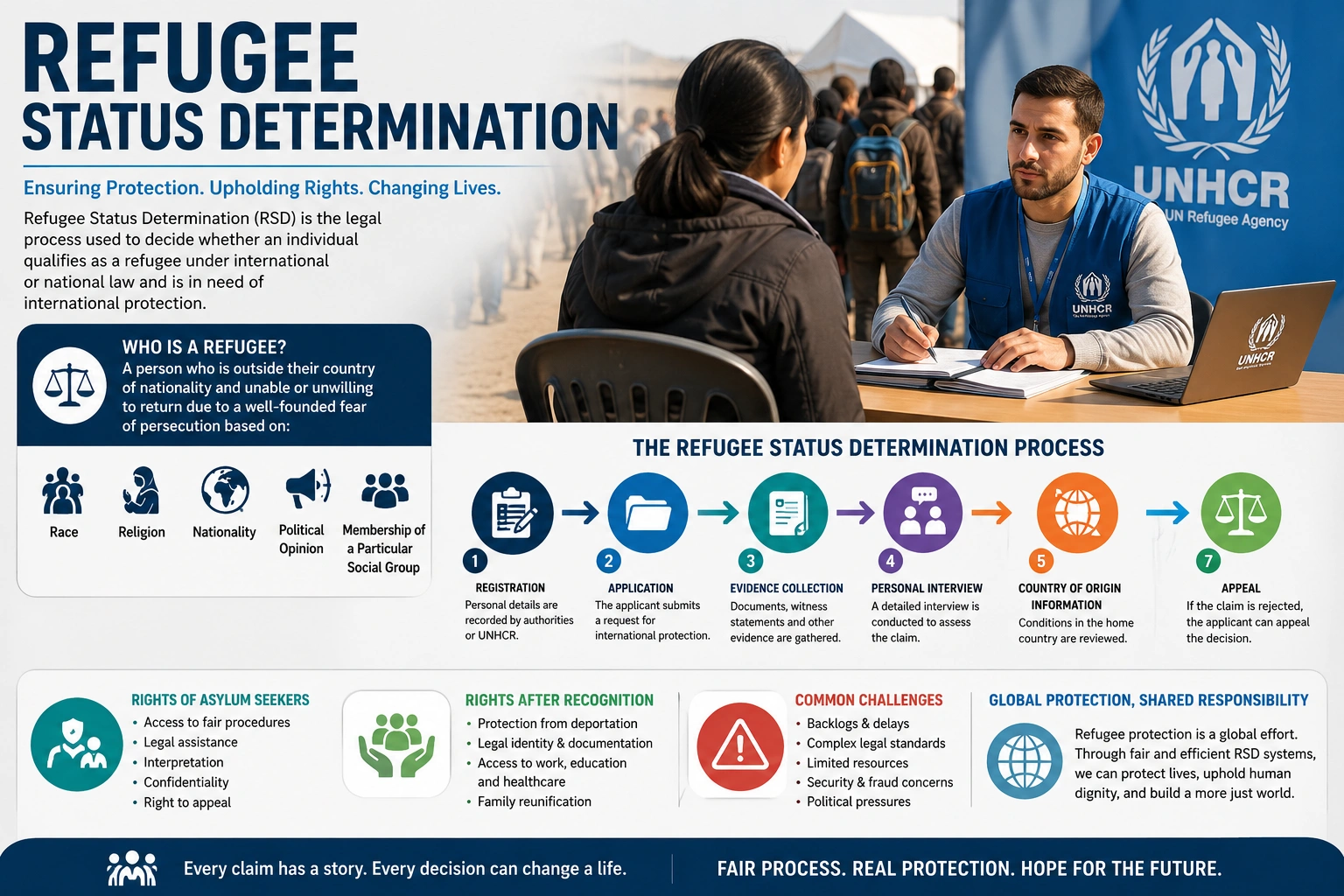
According to the Convention, a refugee is someone who:
Has a well-founded fear of persecution due to race, religion, nationality, political opinion, or membership of a particular social group and is unable or unwilling to return to their country.
The 1967 Protocol
The 1967 Protocol removed the geographical and temporal limitations contained in the original Convention, making refugee protection a truly global system.
Today, the Convention and Protocol remain the foundation of international refugee law.
Who Qualifies as a Refugee?
Not everyone leaving their country qualifies for refugee protection.
To obtain refugee status, applicants generally must demonstrate:
- They are outside their country of nationality.
- They face a well-founded fear of persecution.
- The persecution relates to a protected ground.
- Their government cannot or will not protect them.
- Internal relocation is not reasonably possible.
Well-Founded Fear of Persecution
This requirement contains both subjective and objective elements.
The applicant must genuinely fear returning home, and evidence must show that this fear is reasonable under the circumstances.
Protected Grounds
International refugee law recognizes five protected grounds.
Political Opinion
Examples include:
- Journalists
- Political activists
- Opposition members
- Human rights defenders
- Whistleblowers
Religion
Religious persecution may involve:
- Forced conversion
- Restrictions on worship
- Religious discrimination
- Criminalization of faith practices
Nationality
Nationality claims often arise from ethnic tensions, armed conflict, or discriminatory state policies.
Race and Ethnicity
Minority communities may face persecution due to ethnic identity, language, or ancestry.
Membership of a Particular Social Group
This category frequently includes:
- Women facing gender-based persecution
- LGBTQ+ individuals
- Victims of forced marriage
- Survivors of domestic violence
- Family-based targeting
Refugee vs Asylum Seeker vs Migrant
Many people use these terms interchangeably, but they have different legal meanings.
| Category | Meaning | Legal Status |
| Refugee | Recognized as needing international protection | Protected under refugee law |
| Asylum Seeker | Awaiting a decision on a protection claim | Claim pending |
| Migrant | Moves voluntarily for work, education, or family reasons | Subject to immigration law |
Understanding these distinctions is essential because different rights and protections apply to each category.
How the Refugee Status Determination Process Works
Registration
Applicants register with immigration authorities or UNHCR.
Information collected typically includes:
- Identity details
- Family information
- Travel history
- Reasons for seeking protection
Application Submission
Applicants formally submit a refugee claim and supporting information.
Accuracy is extremely important because inconsistencies can affect credibility assessments later.
Evidence Collection
Authorities review supporting evidence such as:
- Passports
- Identity documents
- Medical reports
- Court records
- Police reports
- Witness statements
- Human rights documentation
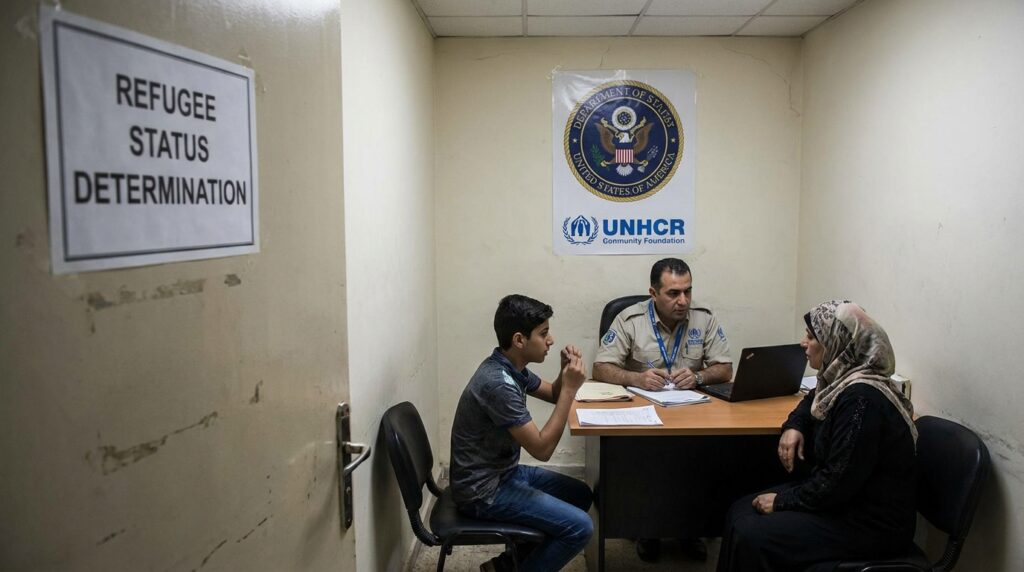
Refugee Status Interview
The refugee interview is often the most important stage.
Applicants explain:
- Their background
- Experiences of persecution
- Reasons for leaving
- Fear of returning
Interview officers assess:
- Credibility
- Consistency
- Plausibility
- Supporting evidence
Country-of-Origin Information Review
Decision-makers compare the applicant’s account with reliable reports about conditions in their home country.
Sources may include:
- Government reports
- Human rights organizations
- Academic research
- International organizations
Decision
Authorities determine whether refugee status should be granted.
Appeal
Negative decisions can often be challenged through administrative or judicial appeals.
Evidence Used in Refugee Claims
Strong evidence can significantly strengthen a refugee claim.
Identity Documents
Examples include:
- Passports
- National identity cards
- Birth certificates
Witness Statements
Family members, colleagues, neighbors, and community leaders may provide supporting testimony.
Medical Evidence
Medical records can support claims involving torture, violence, or trauma.
Human Rights Reports
Independent reports help establish broader patterns of persecution.
Digital Evidence
Modern refugee claims increasingly rely on:
- Emails
- Social media posts
- Text messages
- Videos
- Photographs
Digital evidence can be particularly valuable in documenting threats or political activity.
Common Reasons Refugee Claims Are Rejected
Many applicants mistakenly believe that leaving a dangerous country automatically guarantees refugee status.
Common reasons for rejection include:
- Insufficient evidence
- Credibility concerns
- Contradictory testimony
- Failure to establish persecution
- Internal relocation alternatives
- Serious criminal conduct
- Security-related exclusions
Each claim is assessed individually.
Rights of Asylum Seekers During RSD
International standards generally require asylum seekers to receive fair treatment during the refugee determination process.
These rights may include:
- Access to asylum procedures
- Interpretation services
- Legal assistance
- Confidentiality protections
- Fair hearings
- Appeal opportunities
Procedural fairness is a key element of refugee protection systems.
Rights Granted After Refugee Recognition
Recognized refugees often receive important legal protections.
These may include:
- Residence permits
- Identity documentation
- Work authorization
- Access to education
- Healthcare access
- Social assistance
- Family reunification
Specific rights vary between countries.
Pros and Cons of Refugee Status Determination Systems
Pros
- Protects people fleeing persecution
- Supports international human rights standards
- Provides legal certainty
- Prevents unlawful deportation
- Facilitates long-term integration
Cons
- Long processing delays
- Resource limitations
- Political pressures
- Inconsistent decision-making
- Complex legal procedures
People Also Ask
A: Refugee Status Determination is the process used to determine whether an asylum seeker legally qualifies as a refugee under international or national law.
A: Processing times vary significantly between countries and may range from several months to several years.
A: Yes. Refugee status may be withdrawn in cases involving fraud, acquisition of a new nationality, or fundamental changes in country conditions.
A: Evidence may include identity documents, witness statements, medical records, country reports, photographs, videos, and digital communications.
A: An asylum seeker is awaiting a decision, while a refugee has already been officially recognized and granted protection.
Conclusion
Refugee Status Determination remains one of the most important mechanisms in international refugee protection. By carefully assessing eligibility, evidence, credibility, and country conditions, governments and international organizations identify individuals who require protection from persecution and serious human rights violations.
Although the process can be complex and time-consuming, RSD plays a vital role in safeguarding vulnerable Populations while maintaining the integrity of asylum systems. As global displacement continues to grow, fair, efficient, and transparent refugee determination procedures will remain essential for protecting human dignity, upholding international law, and ensuring that those who genuinely need protection receive it.
For anyone studying refugee law, seeking asylum, or working in migration policy, understanding Refugee Status Determination is essential to navigating today’s increasingly complex global protection landscape.