Introduction
The role of the United Nations has never been more important than it is today. In an increasingly interconnected world facing armed conflicts, climate change, refugee crises, cyber threats, pandemics, and economic instability, international cooperation has become essential for global stability and progress.
Established in 1945 after the devastation of World War II, the United Nations (UN) was created with a clear mission: to prevent future wars, promote peace, protect human rights, and encourage cooperation among nations. Over the decades, the organization has evolved into the world’s largest international institution, bringing together nearly every sovereign state to address challenges that no single country can solve alone.
From peacekeeping operations in conflict zones to humanitarian assistance for displaced populations, the United Nations influences the daily lives of billions of people. Through its agencies, programs, and specialized bodies, it supports health, education, food security, sustainable development, climate action, and international law.
However, the UN is not without controversy. Critics question its effectiveness, decision-making processes, funding structure, and ability to respond quickly to modern crises. These debates have become even more relevant as emerging issues such as artificial intelligence governance, cybersecurity threats, and climate emergencies reshape global politics.
This comprehensive guide explores the role of the United Nations, its objectives, major functions, principal organs, achievements, criticisms, and future relevance in the rapidly changing global landscape.
What Is the United Nations?
The United Nations (UN) is an international organization founded in 1945 to promote peace, security, cooperation, and development among nations.
Currently, the UN comprises 193 member states and serves as a platform for governments to collaborate on global issues affecting humanity.
Key Facts About the United Nations
| Feature | Details |
| Founded | 24 October 1945 |
| Headquarters | New York City, USA |
| Member States | 193 |
| Official Languages | Arabic, Chinese, English, French, Russian, Spanish |
| Primary Purpose | Peace, Security, Human Rights, Development |
| Founding Document | United Nations Charter |
The organization operates through various bodies, agencies, programs, and specialized institutions that collectively address international challenges.
History and Formation of the United Nations
World War II and the Need for a New Organization
The catastrophic destruction caused by World War II demonstrated the need for a stronger international system capable of preventing future conflicts.
The earlier League of Nations had failed to stop aggression by major powers, highlighting the limitations of global governance at the time.
World leaders recognized that lasting peace required structured international cooperation.
The United Nations Charter
In June 1945, representatives from 50 countries met in San Francisco to draft the United Nations Charter.
The Charter became the foundational legal document outlining:
- Purposes of the UN
- Rights and obligations of member states
- Structure of the organization
- Principles of international cooperation
The Charter entered into force on October 24, 1945.
Founding Member States
The original 51 member countries formed the foundation of what would eventually become a near-universal organization representing almost every nation on Earth.
Why Was the United Nations Created?
Preventing Global Conflict
The primary Motivation behind the UN’s creation was to avoid another world war.
By providing diplomatic channels and conflict-resolution mechanisms, the organization seeks to reduce tensions before they escalate into violence.
Promoting International Cooperation
Many global problems transcend borders.
The UN enables countries to work together on issues such as:
- Climate change
- Disease outbreaks
- Human trafficking
- Terrorism
- Economic development
Protecting Human Rights
Following widespread wartime atrocities, the international community sought stronger protections for human dignity and fundamental freedoms.
Supporting Economic Development
Poverty and instability often contribute to conflict.
The UN therefore promotes sustainable economic growth and social progress worldwide.
The Main Objectives of the United Nations
The United Nations Charter outlines several core objectives.
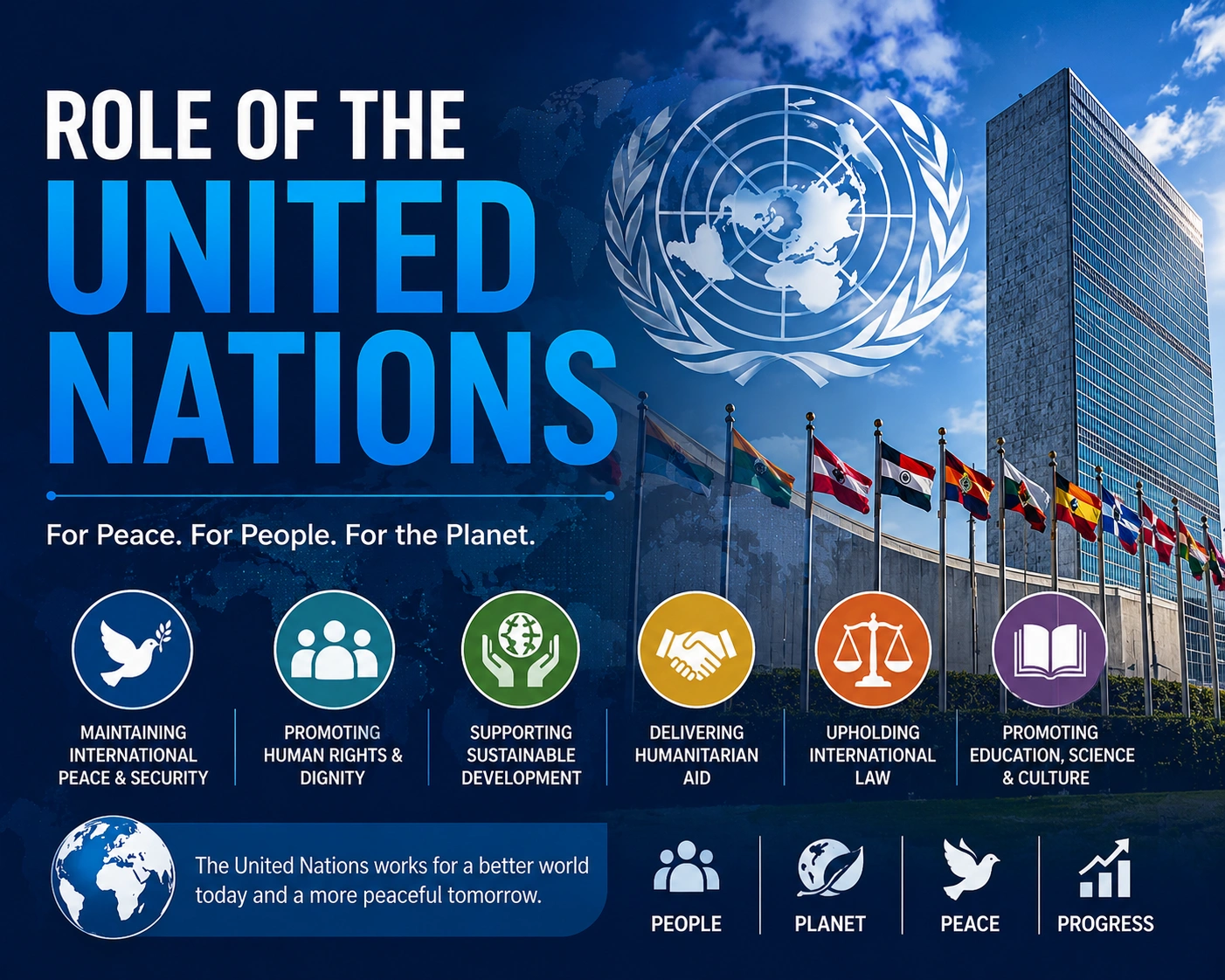
Maintaining International Peace and Security
Preventing wars remains the organization’s primary responsibility.
Developing Friendly Relations Among Nations
The UN encourages diplomatic engagement and peaceful coexistence.
Solving Global Problems
The organization coordinates collective responses to international challenges.
Promoting Human Rights
Human dignity and equality are central principles of the UN system.
Supporting International Law
The UN helps establish legal frameworks governing international behavior.
The Six Principal Organs of the United Nations
Understanding the role of the United Nations requires understanding its six principal organs.
General Assembly
The General Assembly serves as the main deliberative body.
Responsibilities
- Discuss global issues
- Approve budgets
- Elect officials
- Adopt resolutions
Every member state receives one vote.
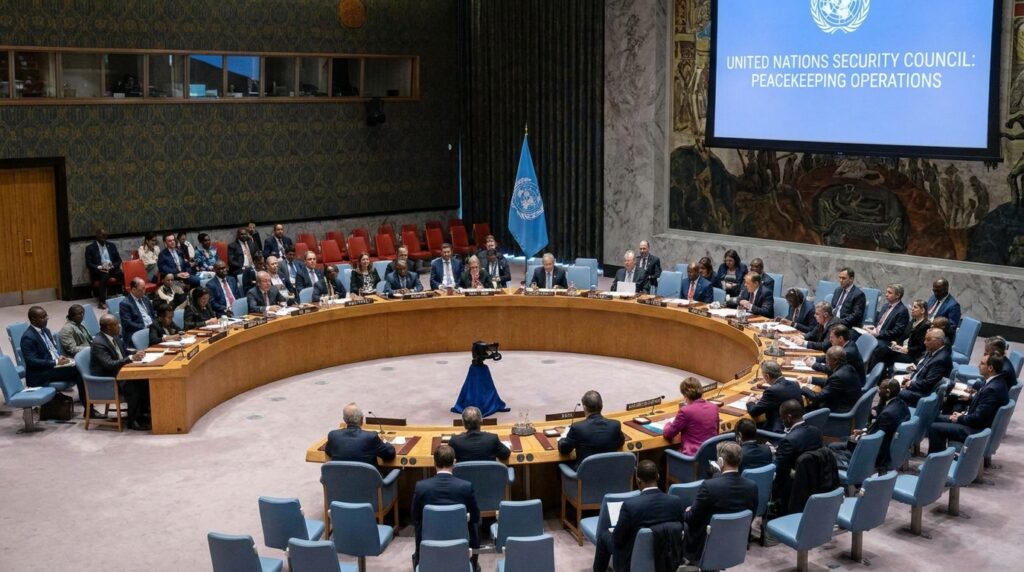
Security Council
The Security Council has primary responsibility for maintaining international peace and security.
Permanent Members
- United States
- United Kingdom
- France
- Russia
- China
Key Powers
- Authorize peacekeeping missions
- Impose sanctions
- Approve military interventions
The veto power remains one of its most controversial features.
Economic and Social Council
ECOSOC coordinates international economic, social, and development efforts.
International Court of Justice
Located in The Hague, the ICJ settles disputes between states and provides legal opinions.
Secretariat
Led by the Secretary-General, the Secretariat manages daily UN operations.
Trusteeship Council
Originally established to oversee trust territories, it suspended operations after completing its mission.
Role of the United Nations in Maintaining World Peace
Peacekeeping Missions
UN peacekeeping forces operate in conflict zones to help maintain stability and support peace agreements.
Peacekeeping Functions
- Monitoring ceasefires
- Protecting civilians
- Supporting elections
- Training security forces
Conflict Prevention
Diplomatic engagement often prevents disputes from escalating.
Mediation and Diplomacy
UN envoys frequently facilitate negotiations between opposing parties.
Peacebuilding Initiatives
Long-term peace requires rebuilding institutions, governance systems, and public trust.
Role of the United Nations in Human Rights Protection
Universal Declaration of Human Rights
Adopted in 1948, the Universal Declaration of Human Rights remains one of the most influential human rights documents ever created.
Human Rights Council
The Human Rights Council monitors violations and promotes accountability.
Protection of Vulnerable Communities
The UN advocates for:
- Women
- Children
- Refugees
- Indigenous peoples
- Persons with disabilities
Role of the United Nations in Humanitarian Assistance
Refugee Protection
Millions of displaced individuals receive support through UN refugee programs.
Disaster Relief
The Organization coordinates emergency responses following natural disasters.
Emergency Aid Programs
UN agencies provide:
- Food
- Shelter
- Medical assistance
- Clean water
- Sanitation services
Role of the United Nations in Sustainable Development
Sustainable Development Goals
The 17 Sustainable Development Goals provide a global framework for development through 2030.
Key Areas
- Poverty reduction
- Education
- Health
- Gender equality
- Climate action
- Clean energy
Climate Action
The UN plays a major role in facilitating international climate agreements.
Education and Health Programs
Global initiatives help improve literacy, healthcare access, and public health outcomes.
Major United Nations Agencies and Their Functions
| Agency | Primary Function |
| WHO | Global health |
| UNICEF | Child welfare |
| UNHCR | Refugee protection |
| UNESCO | Education and culture |
| FAO | Food security |
| UNDP | Development assistance |
Each agency contributes to the broader objectives of the United Nations.
Major Achievements of the United Nations
Peacekeeping Successes
Numerous missions have helped stabilize conflict regions.
Decolonization Efforts
The UN supported independence movements across Africa, Asia, and the Caribbean.
Human Rights Progress
International human rights standards have expanded significantly under UN leadership.
Global Health Campaigns
Major health initiatives have contributed to disease control and vaccination efforts.
Development Initiatives
Development programs have improved living conditions worldwide.
Challenges Facing the United Nations
Security Council Veto Power
The veto often prevents action during major international crises.
Funding Constraints
The UN depends heavily on member-state contributions.
Bureaucratic Challenges
Large organizational structures can slow decision-making.
Political Disagreements
National interests frequently complicate consensus-building.
Peacekeeping Limitations
Peacekeepers often operate under difficult mandates and resource constraints.
Criticism of the United Nations
Rwanda Genocide
The UN has been criticized for failing to prevent mass atrocities during the 1994 genocide.
Syria Crisis
Political divisions limited effective intervention.
Delayed Decision-Making
Complex procedures sometimes slow crisis responses.
Questions About Effectiveness
Critics continue debating whether reforms are necessary for future relevance.
How the United Nations Impacts Everyday Life
The UN influences daily life through:
- Health initiatives
- Food programs
- Climate policies
- Education projects
- Human rights protections
- Disaster response efforts
Many people benefit from UN programs without realizing it.
The Future Role of the United Nations
AI Governance
Artificial intelligence presents new regulatory and ethical challenges requiring international coordination.
Climate Emergencies
Climate adaptation and mitigation will remain major priorities.
Cybersecurity Threats
Global cooperation is increasingly necessary to address cyber warfare and digital security risks.
Reforming Global Governance
Many experts advocate reforms to improve representation, transparency, and effectiveness.
Pros and Cons
Pros
- Promotes international peace
- Supports humanitarian relief
- Protects human rights
- Encourages diplomacy
- Advances in sustainable development
- Facilitates global cooperation
Cons
- Slow decision-making
- Political deadlock
- Security Council veto issues
- Funding challenges
- Limited enforcement powers
- Bureaucratic inefficiencies
People Also Ask
A: The primary role of the United Nations is to maintain international peace and security while promoting cooperation, development, and human rights.
A: The UN provides a platform where countries work together to address global challenges that cannot be solved individually.
A: Through humanitarian programs, refugee protection initiatives, and emergency assistance services.
A: General Assembly, Security Council, ECOSOC, International Court of Justice, Secretariat, and Trusteeship Council.
A: Many experts believe reforms are necessary to address modern challenges and improve organizational effectiveness.
Conclusion
The role of the United Nations extends far beyond diplomacy. Since its establishment in 1945, the organization has served as a cornerstone of international cooperation, helping nations address conflicts, humanitarian crises, development challenges, and emerging global threats.
While the UN has achieved Significant successes in peacekeeping, human rights promotion, global health, and sustainable development, it continues to face criticism regarding political deadlock, funding limitations, and institutional reform. These challenges highlight the complexity of governing an interconnected world with diverse national interests.
Looking ahead, the future of the United Nations will likely be shaped by climate change, artificial intelligence, cybersecurity, migration, and evolving geopolitical dynamics. Whether through reform or adaptation, the organization remains one of humanity’s most important platforms for collective action.
As global challenges become increasingly interconnected, international cooperation will remain essential—and the United Nations will continue to play a central role in shaping that future.