Introduction
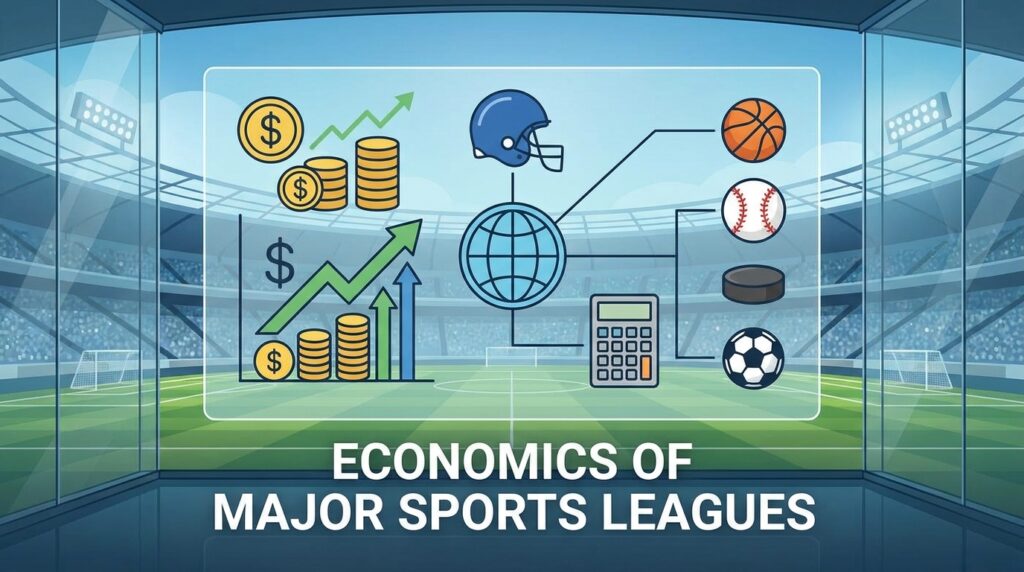
The Economics of Major Sports Leagues have evolved far beyond stadiums, tickets, and fan merchandise. In 2026, global leagues like the NFL, NBA, and Premier League operate as multi-billion-dollar financial ecosystems, powered by media rights, global branding, and digital monetization.
What makes sports fascinating today is not just the game, but the massive financial machinery behind it. From streaming wars to billion-dollar broadcasting deals, sports leagues now behave like global tech companies competing for attention, engagement, and data.
In this article, we break down how money flows inside modern sports leagues, why some leagues dominate globally, and how financial rules like salary caps shape competition. You will also see how investors treat sports teams as high-value financial assets, not just entertainment franchises.
Core Economics of Major Sports Leagues
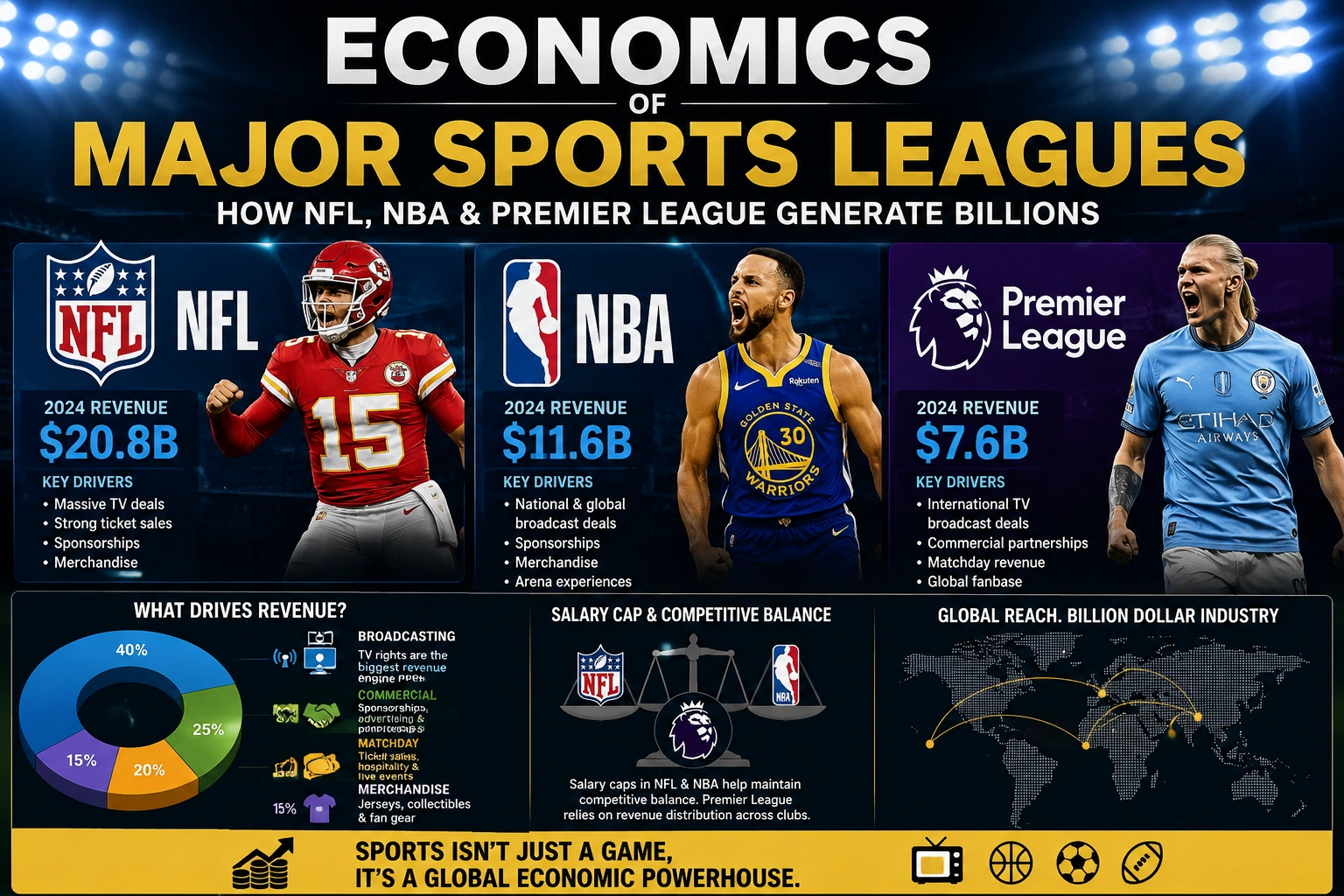
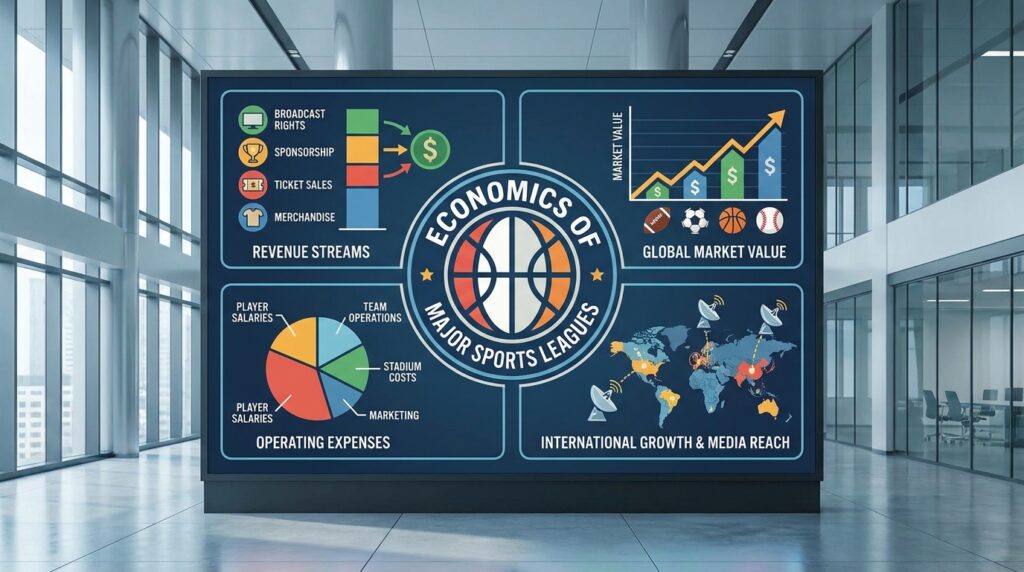
The economics of major sports leagues rest on four pillars that drive billions in annual revenue.
Broadcasting Rights
Broadcasting rights are the largest revenue source for modern sports leagues.
Key Insights:
- Long-term TV contracts guarantee a stable income
- Streaming platforms are now bidding aggressively
- Global distribution increases valuation exponentially
Examples:
- NFL: Multi-billion-dollar broadcasting agreements dominate its revenue model
- NBA: Expanding global streaming deals
- Premier League: Massive international media rights growth
Broadcasting = predictable + scalable + global
Sponsorship & Advertising Revenue
Brands pay premium prices to access emotionally engaged audiences.
Includes:
- Jersey sponsorships
- Stadium naming rights
- Digital ads inside broadcasts
- Social media partnerships
Why it matters:
Sports fans are loyal and emotionally connected, making them ideal for high-value advertising.
Matchday Revenue
This includes:
- Ticket sales
- Stadium food & drinks
- VIP hospitality
Even though stadium experiences are important, they now account for a smaller share of total league revenue than media rights.
Merchandising & Licensing
Sports leagues monetize global fandom through:
- Jerseys & apparel
- Video games (FIFA, NBA 2K)
- Digital collectibles
- Global brand licensing
Cross-League Economic Comparison Framework
One major weakness in competitor content is the lack of a unified comparison system. Below is a structured economic breakdown.
NFL vs NBA vs Premier League Economics
| Feature | NFL | NBA | Premier League |
| League Type | Closed league | Closed league | Open league |
| Revenue Model | Heavy TV + parity | Star-driven global brand | Broadcast + club diversity |
| Salary Cap | Strict | Soft cap + luxury tax | No salary cap |
| Competitive Balance | Very high | Moderate | Low–medium |
| Global Reach | High (growing) | Very high | Extremely high |
| Financial Stability | Very stable | Stable | Uneven |
Key Insight:
Each league follows a different economic philosophy:
- NFL → Stability & equality
- NBA → Superstar entertainment economy
- Premier League → Market-driven chaos with global dominance
Salary Cap vs Free Market Economics
Financial rules define how money and competition interact.
Salary Cap System
How it works:
Teams have a fixed limit on player spending.
Economic Effects:
- Prevents rich teams from dominating
- Ensures competitive balance
- Keeps league valuations stable
Advantages:
- Fair competition
- Financial predictability
- Franchise stability
Disadvantages:
- Limits superstar stacking
- Reduces extreme talent concentration
Free Market System
In leagues like the Premier League:
- No strict salary cap
- Wealthier clubs dominate transfers
- Financial inequality exists between teams
Economic Outcome:
- Global superstar clubs emerge
- Smaller clubs face instability
- Entertainment value remains high
Why Media Rights Dominate Modern Sports Economics
Media rights are the core engine of the modern sports economy.
Why They Matter:
- Scalable globally
- Guaranteed long-term contracts
- Driven by streaming competition
- Increase league valuation dramatically
Key Transformation (2020–2026):
- TV → OTT platforms
- Local audiences → global fanbases
- Games → digital content ecosystems
Franchise Valuation: Why Teams Are Billion-Dollar Assets
Sports franchises are now treated like investment-grade financial assets.
Key Valuation Drivers:
- Media revenue share
- Market size (city economy)
- Global brand reach
- Digital engagement levels
Real Economic Insight:
Even teams that do not win championships can still grow in value due to:
- Media rights distribution
- Global merchandising
- Stable league revenue sharing
Globalization of Sports Economics
Modern leagues are no longer local—they are global entertainment networks.
Expansion Strategies:
- International preseason games
- Global streaming subscriptions
- Asia, the Middle East, and Europe fan expansion
Result:
Sports leagues are becoming global attention monopolies
Modern Revenue Streams
Streaming Wars
Streaming platforms are now competing for sports rights like Hollywood content.
Social Media Monetization
- TikTok highlights the economy
- YouTube clips monetization
- Instagram sports branding
Digital Collectibles
- NFTs (mixed success)
- Fan tokens
- Virtual merchandise ecosystems
Future of Sports Economics
Direct-to-Fan Economy
Clubs may sell content directly without broadcasters.
AI-Driven Sports Analytics Market
Performance data is becoming a commercial product.
Fully Digital Sports Ecosystem
- Virtual stadium experiences
- AI-generated commentary
- Personalized viewing streams
Pros & Cons
Pros:
- Massive global entertainment industry
- Stable revenue models
- High investor confidence
- Strong global job creation
Cons:
- Wealth inequality between clubs
- Over-commercialization risk
- Rising ticket prices
- Competitive imbalance in some leagues
How to Use These AI Tools
If you’re building sports or AI content websites like ToolKitByAI, AI tools can help you:
Practical Uses:
- Generate SEO articles on sports economics
- Analyze competitor content gaps
- Create structured comparison tables
- Write social media captions for sports content
Workflow:
- Use AI for keyword research
- Generate outline with H2/H3 structure
- Expand into long-form SEO content
- Optimize for Google snippets
- Add tables & comparisons for engagement
Tips to Write Your Own AI-Powered Sports Content
- Focus on data + storytelling
- Always include comparisons (NFL vs NBA vs EPL)
- Use Financial terminology naturally
- Add modern trends (streaming, AI, social media)
- Keep paragraphs short and readable
Europe-Based Sports Economics Insight
In Europe, sports economics is heavily influenced by:
- Broadcasting dominance of the Premier League
- UEFA financial systems
- Strong football club branding culture
European audiences value:
- Club history
- Rivalries
- Long-term financial sustainability
This makes Europe one of the most influential sports markets globally.
People Also Ask
A: It refers to how sports leagues generate, distribute, and manage billions through broadcasting, sponsorships, and merchandising.
A: Because they combine global fan engagement with high-value media rights and predictable revenue streams.
A: The NFL is currently one of the highest-earning leagues due to massive TV broadcasting deals.
A: To maintain competitive balance and prevent wealthier teams from dominating the league.
A: They increase global reach, competition for rights, and overall league valuations.
Conclusion
The economics of major sports leagues show modern sports have evolved into powerful global financial systems. Leagues like the NFL, NBA, and Premier League are no longer just sporting competitions—they are multinational Entertainment corporations driven by media rights, sponsorships, and global digital engagement.
From salary caps to streaming wars, every financial rule shapes how fans experience sports today. As technology continues to evolve, sports economics will become even more digital, global, and data-driven.
For fans, investors, and content creators alike, understanding this ecosystem is essential to seeing why sports are now one of the most valuable industries in the world.