Introduction
Competition is everywhere. It exists in sports, education, business, careers, technology, and even personal development. From ancient athletic contests to modern esports tournaments, competition has always been one of humanity’s strongest driving forces.
Yet many people misunderstand the true spirit of competition. Some believe competition is simply about winning, collecting trophies, or defeating opponents. Others see it as a constant battle for superiority. While victory can be rewarding, the deeper purpose of competition goes far beyond scoreboards and rankings.
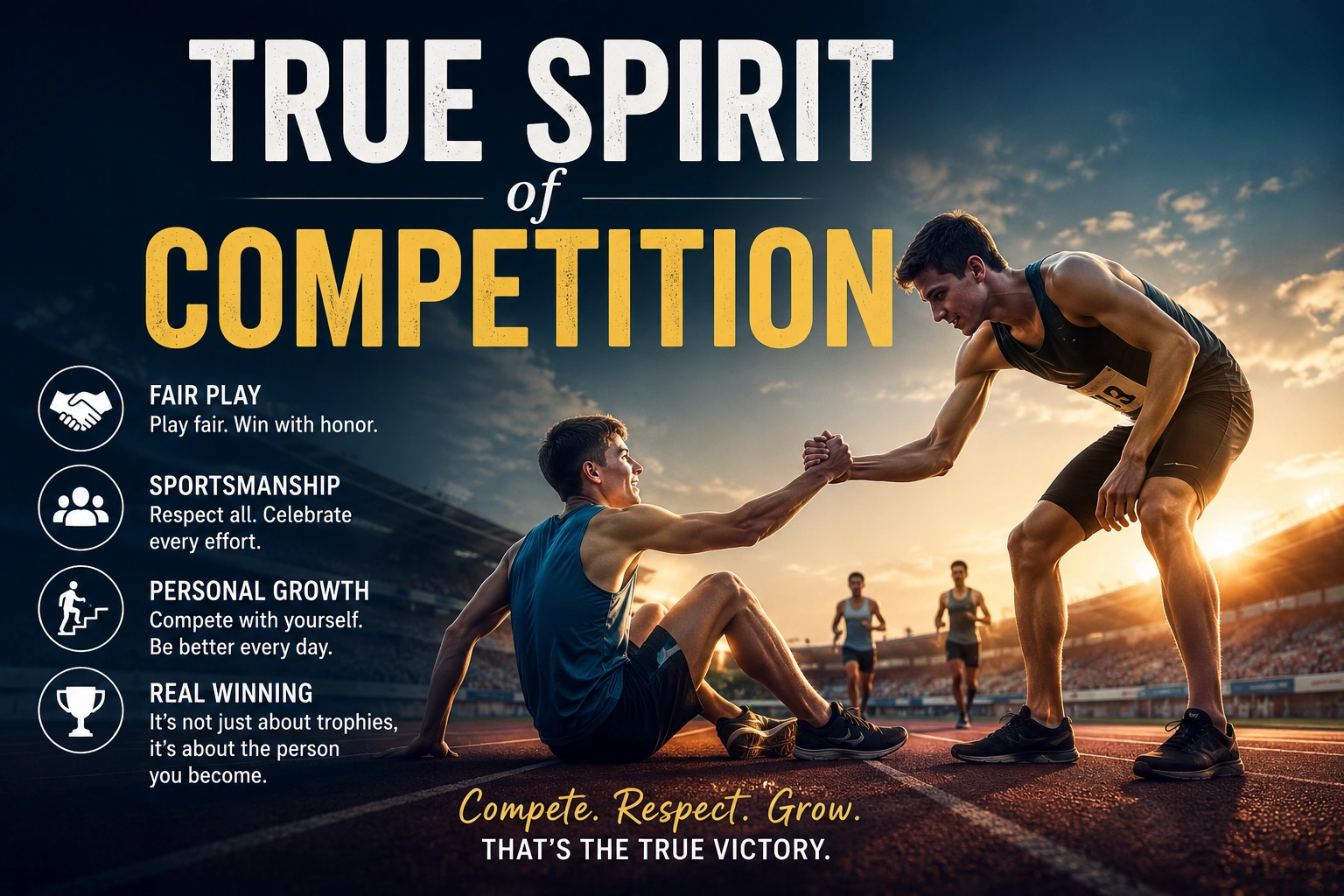
The true spirit of competition is about challenging yourself, striving for excellence, respecting opponents, and growing through every experience. It teaches valuable life skills such as discipline, resilience, teamwork, leadership, integrity, and emotional control. Healthy competition encourages innovation, personal development, and progress while promoting fairness and respect.
Whether you are an athlete, student, entrepreneur, employee, or gamer, understanding the real meaning of competition can transform how you approach success. In this comprehensive guide, we will explore sportsmanship, fair play, personal growth, leadership, modern examples, toxic competition, and the lasting impact competition has on society.
What Is the True Spirit of Competition?
The true spirit of competition is the pursuit of excellence while maintaining fairness, integrity, respect, and sportsmanship.
Competition is not simply about beating others. Instead, it is about becoming the best version of yourself through challenge and effort.
A true competitor:
- Respects opponents
- Follows rules
- Accepts defeat gracefully
- Celebrates victory humbly
- Learns continuously
- Maintains integrity under pressure
The best competitors understand that opponents are not enemies. They are essential partners in growth because they push each other toward higher levels of achievement.
At its core, competition is a tool for self-improvement rather than domination.
The Origin and Meaning of Competition
The word “competition” comes from the Latin word competere, meaning “to strive together.”
This origin reveals an important truth often forgotten today. Competition was never intended to destroy others. Instead, it was designed to inspire individuals to achieve excellence through mutual challenge.
Throughout history, civilizations have used competition to:
- Encourage innovation
- Develop skills
- Strengthen communities
- Promote excellence
- Discover talent
Without competition, progress often slows because there is little motivation to improve.
Healthy competition creates an environment where everyone can grow while pursuing success.
Why Competition Matters in Human Development
Competition plays a critical role in personal and societal development.
Human beings naturally seek growth and achievement. Competition provides the structure that encourages individuals to push beyond their comfort zones.
Benefits of Competition
| Benefit | Impact |
| Goal Setting | Creates motivation and direction |
| Discipline | Encourages consistency and commitment |
| Confidence | Builds belief through achievement |
| Resilience | Helps people recover from setbacks |
| Leadership | Develops decision-making skills |
| Innovation | Inspires creative solutions |
| Adaptability | Encourages continuous learning |
Competition helps individuals discover strengths they never knew they possessed.
Many successful athletes, entrepreneurs, scientists, and leaders achieved greatness because competition pushed them beyond perceived limitations.
Sportsmanship: The Foundation of Fair Competition
Sportsmanship is the ethical framework that makes competition meaningful.
Without sportsmanship, competition can quickly become toxic, unfair, and destructive.
Key Elements of Sportsmanship
Respect
Respect means valuing opponents, officials, teammates, and the rules of the game.
Honesty
Honest competitors avoid cheating and accept responsibility for their actions.
Self-Control
Managing emotions under pressure demonstrates maturity and character.
Fairness
Fair competitors compete within established rules and principles.
Humility
Winning should never result in arrogance or disrespect toward others.
Sportsmanship ensures that competition contributes to personal growth rather than conflict.
Fair Play and Integrity in Sports
Fair play is one of the most important principles of healthy competition.
It ensures that every participant has an equal opportunity to succeed under the same rules.
Examples of Fair Play
- Admitting a foul that officials missed
- Helping injured opponents
- Respecting referee decisions
- Following rules consistently
- Rejecting performance-enhancing drugs
Integrity means doing the right thing even when no one is watching.
Athletes who demonstrate integrity often earn greater respect than those who simply accumulate victories.
Fair play protects the credibility and value of competition.

Winning vs Growing: What Truly Matters?
Modern society often glorifies winning above everything else.
However, focusing exclusively on winning can create unhealthy behaviors, including:
- Cheating
- Excessive pressure
- Burnout
- Anxiety
- Poor sportsmanship
The Growth Mindset Approach
People who embrace growth-focused competition understand that every experience provides valuable lessons.
Even losses can teach:
- Patience
- Adaptability
- Persistence
- Mental toughness
- Strategic thinking
A trophy may last a few years, but personal growth lasts a lifetime.
The greatest competitors focus on becoming better rather than merely becoming victorious.
Characteristics of a True Competitor
Successful competitors share several common traits.
Discipline
Discipline allows individuals to continue working even when motivation disappears.
Resilience
True competitors recover from setbacks and keep moving forward.
Integrity
They refuse shortcuts and remain honest under pressure.
Respect
They value opponents because competition creates growth opportunities.
Humility
They recognize that success is temporary and learning never ends.
Courage
They embrace challenges rather than avoiding them.
These qualities contribute to long-term success both inside and outside competitive environments.
Examples of the True Spirit of Competition
The most memorable moments in competition often have little to do with winning.
Cristiano Ronaldo and Lionel Messi
For more than a decade, their rivalry elevated football standards worldwide.
Instead of destroying each other, they pushed one another toward extraordinary achievements.
Their competition inspired millions and demonstrated how rivals can coexist with mutual respect.
Olympic Sportsmanship Moments
Many Olympic athletes have sacrificed personal success to help injured competitors finish races.
These moments remind audiences that humanity often matters more than medals.
Roger Federer and Rafael Nadal
Their rivalry is widely respected because of the mutual admiration and respect they consistently display.
Their competition improved tennis while showcasing outstanding sportsmanship.
How Competition Builds Leadership Skills
Competition creates situations that require individuals to lead under pressure.
Leadership Skills Developed Through Competition
Decision-Making
Competitors constantly make critical decisions during high-pressure situations.
Accountability
They learn to accept responsibility for outcomes.
Communication
Team sports and collaborative competitions improve communication abilities.
Strategic Thinking
Successful competitors learn to analyze situations and adapt quickly.
Emotional Control
Leaders must remain calm during difficult circumstances.
These leadership skills often transfer directly into careers and business environments.

Competition in Business, Education, and Life
Extends far beyond sports.
Competition in Business
Healthy market competition encourages:
- Better products
- Lower prices
- Greater innovation
- Improved customer experiences
Many groundbreaking innovations emerged because companies competed to solve problems more effectively.
Competition in Education
Academic competition motivates students to:
- Improve knowledge
- Develop critical thinking
- Build discipline
- Achieve higher standards
Competition in Careers
Professional competition encourages continuous learning and skill development.
Employees who embrace healthy competition often experience faster career growth.
Competition in Personal Development
The most important competition may be the one against your previous self.
Personal improvement requires continuously challenging limitations and striving for growth.
The Psychology Behind Competition
Competition activates powerful psychological mechanisms.
Humans are naturally motivated by achievement, recognition, and progress.
Why People Enjoy Competition
- Sense of accomplishment
- Increased motivation
- Social recognition
- Personal growth
- Skill development
Healthy competition can improve confidence and self-esteem when approached correctly.
However, excessive comparison can negatively impact mental health.
Balance remains essential.
The Dangers of Toxic Competition
Competition becomes harmful when winning becomes more important than ethics.
Signs of Toxic Competition
- Cheating
- Doping
- Match fixing
- Bullying
- Manipulation
- Harassment
- Obsession with status
Toxic competition can damage:
- Relationships
- Mental health
- Reputation
- Trust
- Organizational culture
The goal should always be excellence with integrity rather than success at any cost.
How Parents and Coaches Shape Competitive Values
Parents and coaches significantly influence how young people view competition.
Positive role models teach:
- Respect
- Discipline
- Humility
- Effort
- Accountability
Negative influences often create:
- Fear of failure
- Excessive pressure
- Anxiety
- Burnout
The best mentors focus on character development rather than simply winning games.
Children who learn healthy competitive values often carry those lessons throughout adulthood.
Competition in the Digital and Esports Era
Technology has created entirely new competitive landscapes.
Modern competition now includes:
- Esports tournaments
- Streaming platforms
- Content creation
- Social media
- Artificial intelligence innovation
- Online learning
Benefits of Digital Competition
- Global opportunities
- Faster innovation
- Increased accessibility
- New career paths
Challenges of Digital Competition
- Online toxicity
- Harassment
- Unrealistic comparisons
- Burnout
- Mental health concerns
The principles of sportsmanship remain just as important online as they are in traditional sports.
Life Lessons Learned Through Competition
Competition teaches lessons that extend far beyond the playing field.
Valuable Life Lessons
Failure Is Part of Success
Every successful person experiences setbacks.
Hard Work Matters
Consistent effort usually produces long-term results.
Respect Creates Better Relationships
Mutual respect strengthens communities and teams.
Persistence Beats Talent Alone
Determination often outperforms natural ability.
Character Is Everything
People remember how you compete long after they forget the score.
These lessons help individuals succeed in careers, relationships, education, and personal growth.
Pros and Cons of Competition
| Pros | Cons |
| Encourages growth | Can create stress |
| Builds resilience | May encourage comparison |
| Improves performance | Can become unhealthy |
| Develops leadership | Pressure may increase anxiety |
| Inspires innovation | Winning obsession can be harmful |
| Builds confidence | Toxic rivalries may emerge |
The key is maintaining balance and prioritizing personal development over external validation.
The Future of Competition in Society
Competition will continue evolving as technology transforms industries and communities.
Future areas of competition include:
- Artificial intelligence
- Esports
- Renewable energy innovation
- Entrepreneurship
- Space exploration
- Digital education
While competitive environments may change, the core values remain timeless:
- Fairness
- Respect
- Integrity
- Excellence
- Sportsmanship
These principles will continue shaping successful individuals and societies for generations.
People Also Ask
A: The true spirit of competition involves striving for excellence while maintaining fairness, respect, integrity, and sportsmanship.
A: Sportsmanship promotes ethical behavior, positive relationships, and respect among competitors while preserving the integrity of competition.
A: Yes. Healthy competition motivates growth, builds confidence, develops resilience, and encourages continuous improvement.
A: Healthy competition focuses on growth and respect, while toxic competition prioritizes winning at any cost, often leading to unethical behavior.
A: Competition develops discipline, perseverance, humility, leadership, emotional control, and resilience through challenging experiences.
Conclusion
The true spirit of competition is not about dominating others or collecting trophies. It is about growth, self-improvement, resilience, and the pursuit of excellence. Whether in sports, business, education, or everyday life, competition provides opportunities to discover strengths, overcome weaknesses, and build character.
When guided by sportsmanship, integrity, and respect, competition becomes one of the most powerful tools for personal development. It teaches valuable life lessons, strengthens leadership abilities, and encourages innovation while fostering meaningful relationships.
The greatest competitors are not remembered solely for their victories. They are remembered for their character, humility, and the example they set for others. In a world increasingly driven by achievement and performance, embracing the true spirit of competition ensures that success remains meaningful and sustainable.
Ultimately, the most important competition is not against other people—it is against the person you were yesterday. By focusing on continuous growth, fairness, and excellence, anyone can embody the true spirit of competition and achieve lasting success.