Introduction
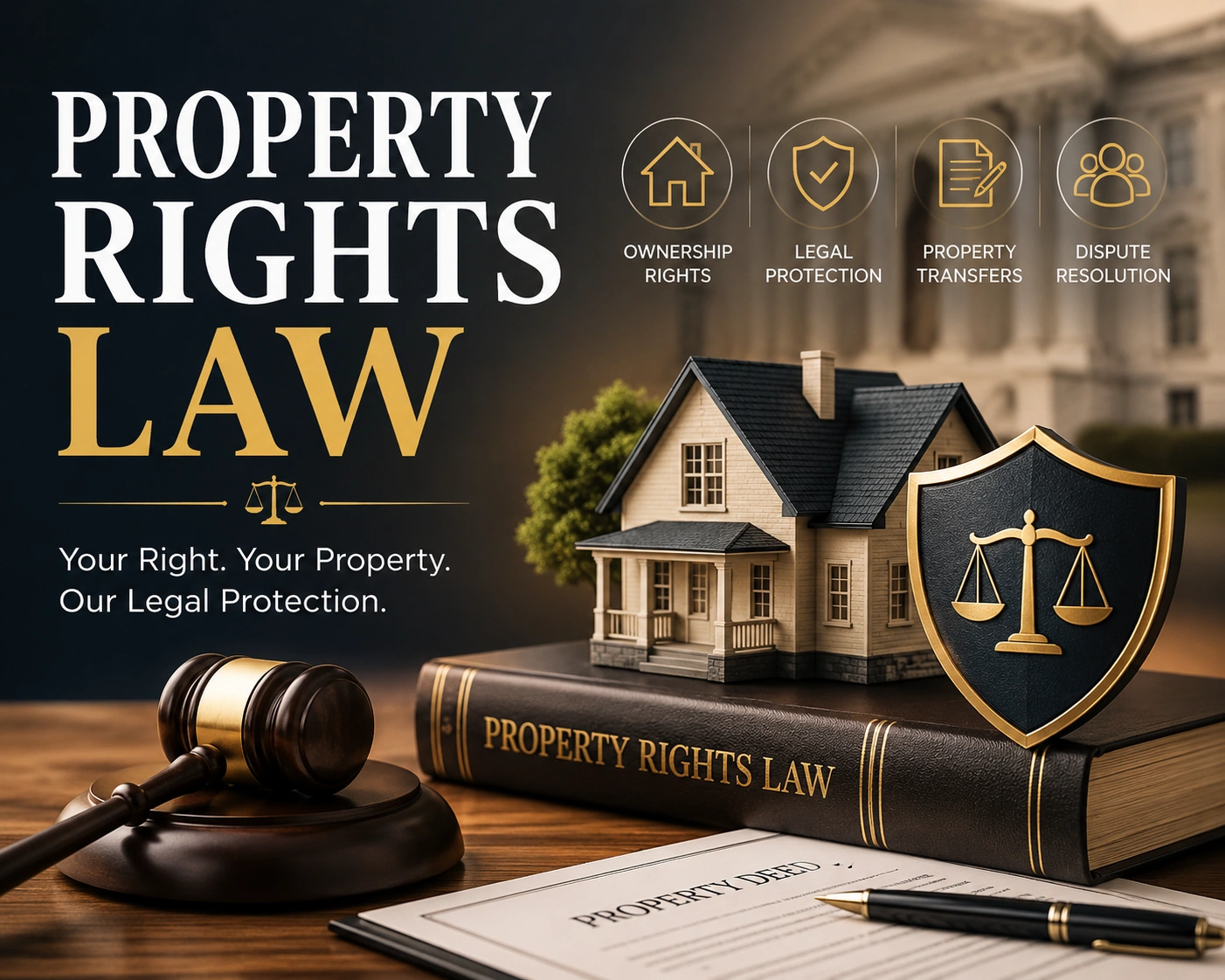
Property Rights Law is one of the most important areas of law because it determines who owns property, how ownership is protected, and how property can be transferred, inherited, or regulated. From homes and land to intellectual property and digital assets, property rights shape economic growth, personal wealth, and legal security.
Without strong property rights, individuals and businesses would struggle to invest, innovate, or build long-term wealth. Property rights encourage stability by providing clear rules regarding ownership and legal remedies when disputes arise.
In today’s world, property rights extend far beyond traditional real estate. They now include intellectual property, cryptocurrency, digital assets, and virtual property. At the same time, governments regulate property through zoning laws, environmental regulations, taxation, and land acquisition policies.
This comprehensive guide explains everything you need to know about Property Rights Law, including ownership rights, constitutional protections, land ownership, property transfers, inheritance issues, government powers, property disputes, and emerging challenges in the digital era.
What Is Property Rights Law?
Property Rights Law refers to the legal rules governing ownership, possession, use, transfer, and protection of property.
It defines:
- Who legally owns an asset
- Who may use it
- How ownership is transferred
- How ownership is protected
- What remedies exist when rights are violated
Property rights create legal certainty and reduce conflicts over ownership.
Definition of Property Rights
Property rights are legally enforceable rights that allow a person or organization to possess, use, enjoy, transfer, and exclude others from a specific property.
These rights may apply to:
- Land
- Buildings
- Vehicles
- Personal belongings
- Intellectual property
- Cryptocurrency
- Digital assets
Why Property Rights Matter
Strong property rights provide several benefits:
- Economic growth
- Business development
- Wealth creation
- Investment protection
- Social stability
- Legal certainty
Countries with stronger property rights often experience higher levels of economic development and foreign investment.
History of Property Rights
The concept of ownership dates back thousands of years.
Ancient civilizations recognized ownership of land, livestock, and valuable goods. Roman law introduced sophisticated ownership principles that continue to influence modern property law.
During the medieval period, property ownership was closely linked to political power. Today, property rights are recognized and protected by constitutions, statutes, and international legal frameworks worldwide.
Understanding the Concept of Property
Property can be divided into different legal categories.
Real Property
Real property includes:
- Land
- Buildings
- Houses
- Commercial structures
- Permanent improvements
Personal Property
Personal property refers to movable assets such as:
- Cars
- Jewelry
- Electronics
- Furniture
- Machinery
Tangible Property
Tangible property consists of physical items that can be touched and possessed.
Examples include:
- Houses
- Land
- Vehicles
- Equipment
Intangible Property
Intangible property has value but lacks physical form.
Examples include:
- Copyrights
- Patents
- Trademarks
- Business goodwill
- Digital assets
Types of Property Rights
Property ownership is often described as a collection of legal rights.
Possession
The owner has the legal right to occupy and possess the property.
Control
The owner can determine how the property is used within legal limits.
Exclusion
The owner can prevent unauthorized persons from entering or using the property.
Enjoyment
The owner may enjoy the benefits generated by the property.
Transfer
The owner can sell, lease, gift, or transfer ownership.
Disposition
The owner may alter, destroy, or abandon the property subject to legal restrictions.
The Bundle of Rights Theory
Modern property law often describes ownership as a “bundle of rights.”
| Right | Description |
| Possession | Right to occupy |
| Use | Right to use |
| Exclusion | Right to exclude others |
| Transfer | Right to sell or gift |
| Development | Right to improve property |
This theory recognizes that different people may hold different rights in the same property.
For example:
- A landlord owns a building.
- A tenant has possession rights.
- A bank may hold a mortgage interest.
Private Property Rights vs Public Property Rights
| Feature | Private Property | Public Property |
| Owner | Individual or Company | Government |
| Access | Restricted | Public |
| Transferability | Usually transferable | Limited |
| Purpose | Private benefit | Public benefit |
Private property rights are essential to market economies, while public property serves community interests.
Constitutional Protection of Property Rights
Many constitutions recognize property rights as fundamental legal protections.
Fundamental Rights and Property
Constitutional protections often prevent governments from arbitrarily taking private property.
These protections promote:
- Legal certainty
- Economic confidence
- Fair treatment
- Judicial oversight
Government Restrictions
Property rights are not absolute.
Governments may impose restrictions through:
- Building regulations
- Environmental laws
- Tax laws
- Zoning rules
- Public safety requirements
Due Process and Compensation
When governments acquire private property for public purposes, legal systems often require:
- Notice
- Fair procedures
- Judicial review
- Compensation
Property Ownership and Legal Titles
Ownership can exist in different forms.
Freehold Ownership
The owner enjoys the highest degree of ownership rights and generally owns the property indefinitely.
Leasehold Ownership
Ownership rights are limited to a specified lease term.
Joint Ownership
Two or more individuals share ownership rights.
Common forms include:
- Joint tenancy
- Tenancy in common
Trust Ownership
Property may be held by trustees for the benefit of beneficiaries.
Trusts are widely used for:
- Estate planning
- Asset protection
- Wealth management
Property Transfers Under Law
Property ownership can be transferred through several legal methods.
Sale
Ownership changes through a legally enforceable contract and payment.
Gift
Property is voluntarily transferred without payment.
Inheritance
Ownership passes to heirs through wills or succession laws.
Lease
Temporary possession rights are granted without transferring ownership.
Mortgage
Property serves as security for a loan while ownership remains with the borrower.
Land Ownership Rights
Land ownership often includes multiple legal interests.
Surface Rights
Rights relating to the land’s surface.
Mineral Rights
The right to extract minerals beneath the surface.
Water Rights
Rights regarding the use of water resources.
Air Rights
Rights relating to the space above land.
Property Registration and Documentation
Property registration provides legal proof of ownership.
Benefits include:
- Clear ownership records
- Reduced fraud
- Easier property transfers
- Better dispute resolution
Important documents often include:
- Title deeds
- Registration certificates
- Survey records
- Tax records
Property Rights and Real Estate Law
Real estate law governs transactions involving land and buildings.
Common legal matters include:
- Property sales
- Leasing
- Mortgages
- Construction agreements
- Boundary disputes
Real estate law plays a crucial role in protecting ownership rights.
Property Rights and Inheritance Law
Inheritance laws determine how property passes after death.
Key concepts include:
- Wills
- Probate
- Intestate succession
- Family inheritance rights
- Trust administration
Inheritance disputes are among the most common property-related legal conflicts.
Property Disputes and Legal Remedies
Property disputes arise when ownership rights are challenged.
Boundary Disputes
Disagreements regarding property boundaries.
Title Disputes
Conflicts concerning legal ownership.
Possession Claims
Claims involving occupation and control of property.
Partition Suits
Legal proceedings used to divide jointly owned property.
Legal Remedies
Courts may provide:
- Injunctions
- Damages
- Possession orders
- Declaratory judgments
Adverse Possession Explained
Adverse possession allows a person to acquire ownership after occupying property openly and continuously for a legally prescribed period.
Requirements generally include:
- Continuous possession
- Open occupation
- Exclusive use
- Hostile possession
Rules vary by jurisdiction.
Government Powers Over Private Property
Governments possess certain powers over privately owned property.
Land Acquisition
Governments may acquire land for infrastructure and public projects.
Eminent Domain
The legal authority to take private property for public use with compensation.
Urban Planning
Governments regulate development to promote orderly growth.
Zoning Regulations
Zoning laws determine permissible land uses, such as:
- Residential
- Commercial
- Industrial
- Agricultural
Intellectual Property Rights vs Property Rights
Although related, intellectual property rights protect creations of the mind rather than physical assets.
| Property Rights | Intellectual Property Rights |
| Land | Copyright |
| Buildings | Patent |
| Vehicles | Trademark |
| Physical Assets | Trade Secrets |
Intellectual property has become increasingly valuable in the digital economy.
Digital Property Rights in the Modern Era
Technology has transformed traditional ownership concepts.
Cryptocurrency Assets
Cryptocurrencies represent digital forms of property that may have significant value.
Digital Ownership
People increasingly own:
- Online accounts
- Digital collectibles
- Virtual assets
Virtual Property
Virtual land and assets in digital environments have become major economic assets.
AI-Generated Assets
Artificial intelligence raises new questions regarding ownership and intellectual property rights.
Property Rights as Human Rights
Many international legal instruments recognize property rights as important human rights protections.
Property rights support:
- Economic freedom
- Personal autonomy
- Social stability
- Wealth creation
Strong property protections are often associated with democratic governance and economic development.
Major Challenges Facing Property Rights Today
Property Fraud
Fraudulent transfers and forged ownership documents remain common problems.
Illegal Occupation
Unauthorized occupation creates legal conflicts worldwide.
Land Grabbing
Powerful actors sometimes unlawfully acquire land from vulnerable communities.
Cyber Property Theft
Digital assets face growing threats from hacking and cybercrime.
Landmark Property Rights Cases
Several historic court decisions have shaped modern property law.
Examples include cases involving:
- Eminent domain
- Constitutional protections
- Adverse possession
- Property registration
- Inheritance disputes
These decisions continue to influence legal systems around the world.
How to Protect Your Property Rights
Consider the following best practices:
- Register ownership promptly
- Maintain accurate records
- Conduct title searches
- Use written contracts
- Monitor property boundaries
- Update estate plans
- Protect digital assets with strong security measures
Pros
Strong legal protection
Encourages investment
Supports economic growth
Protects personal wealth
Promotes legal certainty
Cons
Property disputes can be costly
Registration processes may be complex
Government regulations may limit use
Fraud remains a risk
Legal proceedings can be lengthy
Future of Property Rights Law
Property rights law is evolving rapidly.
Emerging trends include:
- Blockchain-based property records
- Digital asset regulation
- Cryptocurrency ownership frameworks
- AI-generated intellectual property
- Smart contracts
- Enhanced cyber-property protections
As technology advances, lawmakers will continue adapting traditional property principles to new forms of ownership.
People Also Ask
A: Property Rights Law governs ownership, possession, use, transfer, and protection of property and related legal interests.
A: The main rights include possession, control, enjoyment, exclusion, transfer, and disposition.
A: Yes. Governments may acquire private property for public purposes, usually subject to legal procedures and compensation requirements.
A: Adverse possession allows a person to obtain ownership through continuous, open, and legally recognized occupation over time.
A: In many jurisdictions, digital assets such as cryptocurrency and virtual property are increasingly recognized as forms of property.
Conclusion
Property Rights Law is the legal foundation that protects ownership, promotes economic growth, and provides certainty in personal and commercial transactions. Whether dealing with land, real estate, Inheritance, intellectual property, or digital assets, understanding property rights is essential for protecting valuable interests and avoiding legal disputes.
As society becomes increasingly digital, property law continues to expand beyond traditional land ownership into areas such as cryptocurrency, virtual property, data ownership, and AI-generated assets. At the same time, governments must balance private ownership rights with public interests through regulation and lawful land acquisition.
By understanding your legal rights, maintaining proper documentation, and seeking professional advice when necessary, you can better protect your property and navigate the evolving landscape of modern property law.