Introduction
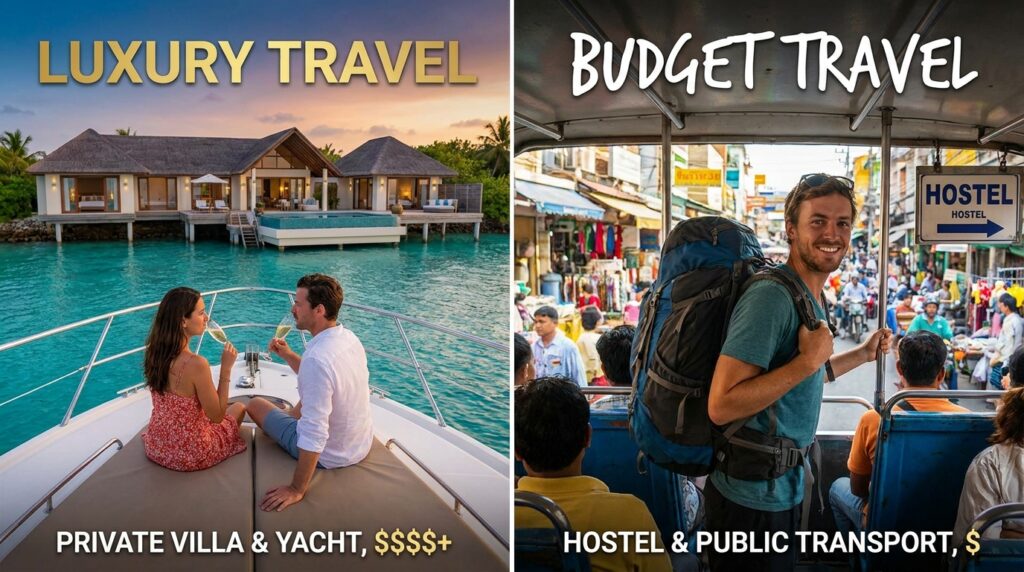
Travel in 2026 is more flexible, Personalized, and experience-driven than ever before. People no longer simply choose between “cheap” and “expensive” trips. Instead, they focus on value, comfort, time, and experience quality.
Some travelers prefer budget travel because it allows them to explore more destinations at a lower cost. Others choose luxury travel because it provides comfort, convenience, and premium experiences.
But the real question is not which is better. The real question is:
Which travel style fits your personality, goals, and budget?
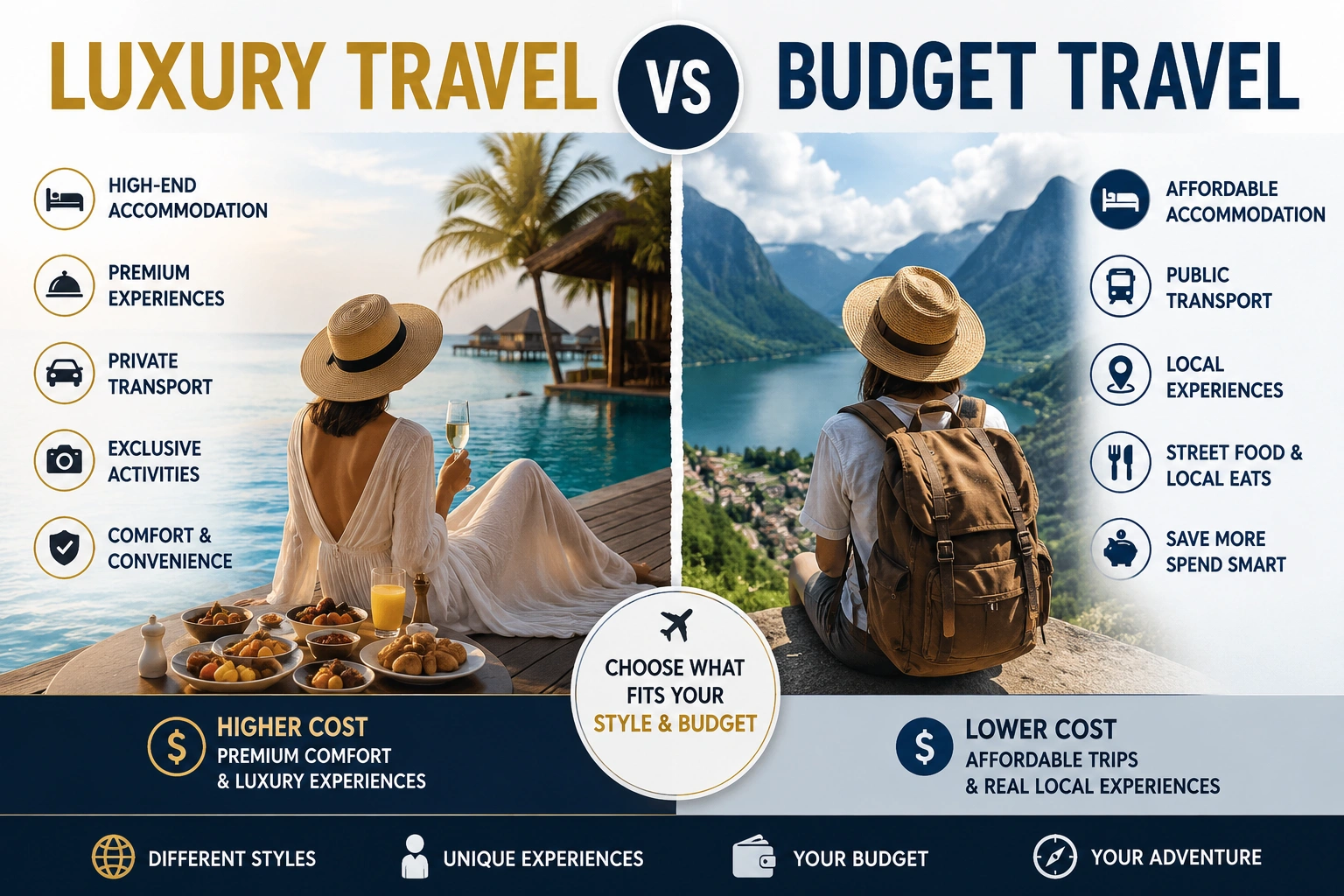
This guide will break down luxury travel vs budget travel in detail, including costs, experiences, pros and cons, and a smart hybrid strategy that modern travelers use in 2026.
What is Budget Travel?
Budget travel is a travel style where the main focus is to minimize expenses while maximizing experiences.
It is popular among students, backpackers, solo travelers, and long-term explorers who want to see the world without spending too much money.
Key Characteristics of Budget Travel
Budget travel usually includes:
- Hostels, guesthouses, or budget hotels
- Public transportation (buses, trains, metro)
- Street food and local restaurants
- Low-cost airlines or travel deals
- Self-planned itineraries
- Shared or group accommodations
Core Philosophy of Budget Travel
Budget travel is not about being cheap — it is about being smart with money.
It focuses on:
- More travel time for less money
- Cultural immersion
- Flexibility in plans
- Experiencing destinations like locals
Average Cost of Budget Travel (2026)
- Asia: $25 – $80 per day
- Europe: $60 – $150 per day
- USA: $80 – $200 per day
These costs vary depending on city, season, and travel style.
Best Destinations for Budget Travel
- Thailand
- Vietnam
- Indonesia
- India
- Eastern European countries
- Some parts of South America
Best For
Budget travel is ideal for:
- Backpackers
- Students
- Solo travelers
- Long-term travelers
- Digital nomads
What is Luxury Travel?
Luxury travel is a premium travel style focused on comfort, convenience, exclusivity, and high-quality experiences.
It is designed for travelers who value time, privacy, and comfort over cost savings.
Key Characteristics of Luxury Travel
Luxury travel includes:
- 5-star hotels and resorts
- Business class or first-class flights
- Private transportation
- Personalized tour guides
- Fine dining restaurants
- VIP access to attractions
- Concierge services
Core Philosophy of Luxury Travel
Luxury travel focuses on:
- Comfort over cost
- Time-saving convenience
- Stress-free experience
- Exclusive and curated activities
Average Cost of Luxury Travel (2026)
- Asia: $200 – $600+ per day
- Europe: $400 – $1200+ per day
- USA: $350 – $1000+ per day
Luxury travel can go much higher depending on the destination and lifestyle.
Best Destinations for Luxury Travel
- Switzerland
- Maldives
- Dubai
- France (Paris)
- Italy (Amalfi Coast)
- Japan’s luxury resorts
Best For
Luxury travel is ideal for:
- Couples
- Honeymoon travelers
- Business travelers
- Families
- High-income travelers
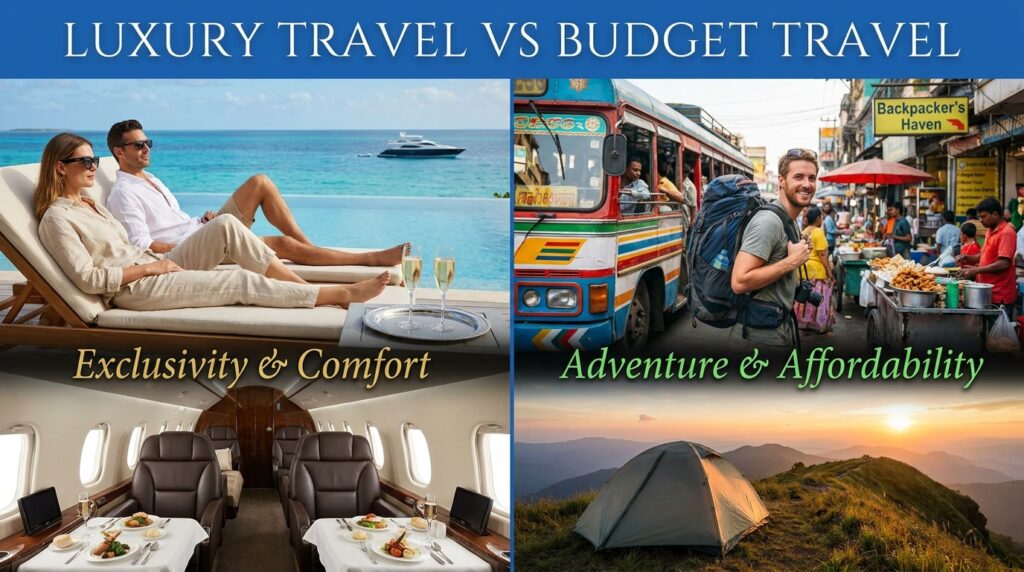
Budget Travel VS Luxury Travel Comparison
| Factor | Budget Travel | Luxury Travel |
| Cost | Low | High |
| Comfort | Basic | Premium |
| Experience Type | Local & raw | Curated & exclusive |
| Flexibility | High | Medium |
| Privacy | Low | High |
| Planning Effort | High | Low |
| Stress Level | Higher | Very low |
| Trip Duration | Longer | Shorter |
Experience Comparison: Real Difference
Budget Travel Experience
Budget travel feels:
- More adventurous
- Less predictable
- More immersive
- Sometimes uncomfortable
You meet locals, explore hidden places, and often step outside your comfort zone.
Luxury Travel Experience
Luxury travel feels:
- Smooth and organized
- Stress-free
- Comfortable
- Time-efficient
Everything is planned for you, from airport pickup to hotel check-in.
Cost Breakdown (Real Travel Example)
7-Day Budget Trip
- Accommodation: $200–$400
- Food: $100–$200
- Transport: $100–$150
- Activities: $100–$300
Total: $500 – $900
Day Luxury Trip
- Accommodation: $2000–$5000
- Flights: $800–$2000
- Food: $500–$1500
- Activities: $500–$2000
Total: $4000 – $10,000+
Pros and Cons
Pros
- Affordable travel
- More destinations possible
- Longer trips
- Strong cultural experience
Cons
- Less comfort
- Time-consuming planning
- Physical fatigue
- Limited privacy
Pros and Cons
Pros
- Maximum comfort
- Stress-free experience
- High-quality service
- Time-saving
Cons
- Very expensive
- Limited duration
- Less local interaction
- Can feel less adventurous
Smart Travel Trend: Hybrid Travel
Modern travelers no longer choose one extreme. Instead, they mix both styles.
This is called Smart Luxury Travel.
How It Works
- Save money on flights
- Spend on hotels or experiences
- Mix street food with fine dining
- Choose one premium experience per trip
Example Hybrid Trip
- Flight: Economy class
- Hotel: 2 nights luxury + budget stays
- Food: Local + one fine dining dinner
- Activity: One VIP tour
This gives the best balance of cost + comfort.
Which Travel Style Should You Choose?
Choose Budget Travel If:
- You want long trips
- You love adventure
- You enjoy local culture
- You want to save money
Luxury Travel If:
- You want comfort
- You have limited time
- You prefer convenience
- You want premium experiences
Hybrid Travel If:
- You want balance
- You travel occasionally
- You want value + comfort together
Common Travel Mistakes
- Overspending on hotels only
- Ignoring season prices
- Not planning transport
- Choosing only luxury or only budget
- Not balancing experience vs cost
People Also Ask
A: Yes, if comfort, convenience, and time-saving matter to you.
A: Yes, especially among students and long-term travelers.
A: A hybrid method combining budget savings and selective luxury spending.
A: Both are safe if planned properly.
A: Yes, with good planning and smart choices.
Conclusion
Luxury travel and budget travel are not competitors — they are different experiences for different people.
Budget travel gives freedom, Exploration, and affordability. Luxury travel gives comfort, convenience, and premium service.
In 2026, the smartest travelers don’t choose one side. They combine both using a hybrid strategy to get maximum value and experience.