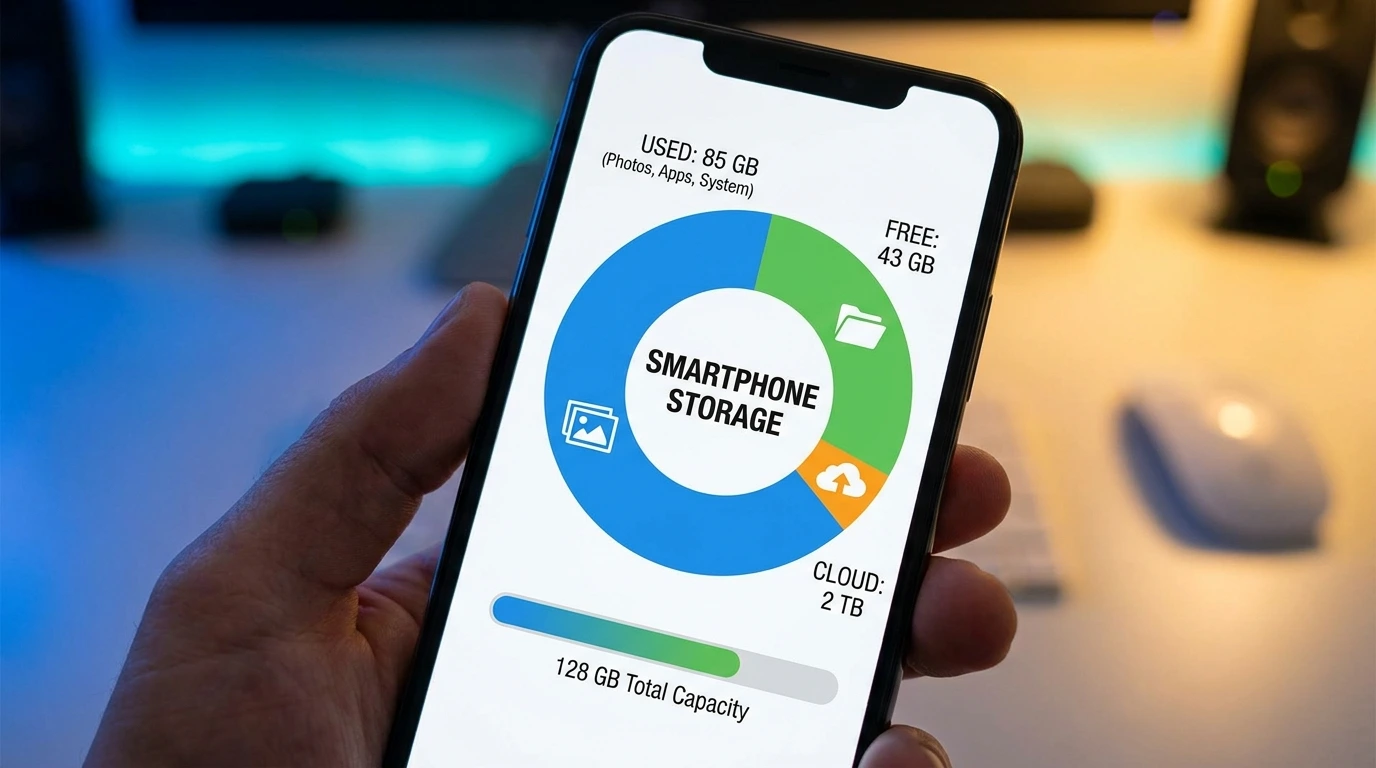
Introduction
Smartphones have become our cameras, gaming consoles, workstations, entertainment hubs, and AI assistants all in one device. Because of this, Smartphone Storage matters more today than ever before.
A phone that once felt fast and spacious can suddenly become frustrating when storage runs out. Apps grow larger every year, AI tools consume more local files, and 4K videos can fill your device within days. Many users regret buying a phone with too little storage because deleting files constantly becomes exhausting.
Whether you are a student, mobile gamer, creator, business professional, or casual user, choosing the right phone storage can save money, improve performance, and future-proof your device for years.
This complete guide explains everything you need to know about smartphone storage in 2026 — from 128GB vs 256GB comparisons to gaming requirements, AI app storage usage, cloud storage solutions, and storage speed technologies like UFS 4.0.
What Is Smartphone Storage?
Smartphone storage is the internal space where your phone keeps apps, photos, videos, games, downloads, and operating system files. Unlike RAM, which temporarily handles active tasks, storage permanently saves your data.
Modern smartphones mainly use flash storage technologies such as:
- UFS 2.2
- UFS 3.1
- UFS 4.0
- NVMe storage (premium devices)
These storage technologies directly affect:
- App launch speed
- Gaming performance
- File transfer speed
- Video editing performance
- Overall system responsiveness
Difference Between RAM and Storage
Many users confuse RAM with storage.
| Feature | RAM | Storage |
| Purpose | Temporary memory | Permanent file storage |
| Affects | Multitasking | Capacity & file space |
| Deleted After Restart? | Yes | No |
| Used For | Running apps | Saving apps, videos, photos |
Understanding this difference helps buyers make smarter smartphone decisions.
Why Smartphone Storage Matters More Than Ever
The average smartphone user stores significantly more data in 2026 compared to previous years.
AI Apps Consume Huge Space
Modern AI-powered apps use:
- Offline AI models
- Voice processing files
- Image generation assets
- Smart assistant databases
- Translation packs
These features can consume several gigabytes over time.
Mobile Games Are Massive
Modern games now regularly exceed:
- 20GB
- 30GB
- 50GB after updates
Games like PUBG Mobile, Call of Duty Mobile, Genshin Impact, and Warzone Mobile require large storage reserves.
4K and 8K Video Recording
Content creators and social media users consume more storage than ever.
Approximate video storage usage:
| Video Quality | Approximate Space |
| 1080p | 130MB per minute |
| 4K | 375MB–600MB per minute |
| 8K | 700MB–1GB per minute |
This is why creators often need 256GB or 512GB storage.
Smartphone Storage Sizes Explained
64GB Smartphones
Best for:
- Basic users
- Calls and messaging
- Light social media usage
Limitations:
- Fills quickly
- Poor long-term value
- Limited gaming support
- Weak future-proofing
In 2026, 64GB is generally considered outdated for most users.
128GB Smartphones
Best for:
- Students
- Casual users
- Social media users
- Moderate photography
Advantages:
- Affordable
- Balanced value
- Enough for average usage
For many users, 128GB is now the minimum safe storage option.
256GB Smartphones
Best for:
- Mobile gamers
- Heavy app users
- Content creators
- Professionals
Advantages:
- Excellent future-proofing
- Better for gaming
- Comfortable media storage
- Ideal for long-term usage
512GB Smartphones
Best for:
- Professional creators
- Mobile filmmakers
- Heavy travelers
- Offline media collectors
Advantages:
- Massive local storage
- Excellent for 4K/8K recording
- Reduces cloud dependency
1TB Smartphones
Best for:
- Professional workflows
- Extreme content creation
- Large offline libraries
- Advanced mobile editing
Usually found in flagship smartphones.

How Much Smartphone Storage Do You Need?
Choosing the right phone storage depends on your lifestyle and digital habits.
Casual Users
Recommended: 128GB
Ideal for:
- TikTok
- YouTube
- Moderate photography
Students
Recommended: 128GB–256GB
Useful for:
- Lecture downloads
- PDFs
- Educational apps
- Cloud documents
- Offline videos
Mobile Gamers
Recommended: 256GB or higher
Gaming updates consume massive storage, especially on high-end Android phones.
Content Creators
Recommended: 512GB or higher
Creators need storage for:
- RAW photography
- 4K/8K videos
- Editing apps
- Project files
- Offline backups
Business Professionals
Recommended: 256GB
Helps store:
- Work presentations
- Offline documents
- Meetings
- Large email attachments
- Productivity tools
128GB vs 256GB vs 512GB: Which Is Best?
This is one of the most searched smartphone storage questions online.
| Storage Option | Best For | Main Benefit |
| 128GB | Average users | Affordable |
| 256GB | Gamers & creators | Future-proof |
| 512GB | Professionals | Massive media storage |
128GB
Good for average daily use, but may feel limited after several years.
256GB
Provides the best balance between price, usability, and long-term value.
512GB
Excellent for power users who create large media files regularly.
For most people in 2026, 256GB smartphone storage is the smartest overall choice.
Does Storage Affect Smartphone Performance?
Yes, storage speed directly impacts performance.
Faster Storage Improves:
- App launch speed
- Gaming loading times
- Multitasking efficiency
- Video editing responsiveness
- File transfer speed
Phones using UFS 4.0 storage are dramatically faster than older UFS 2.2 devices.
UFS 3.1 vs UFS 4.0
| Feature | UFS 3.1 | UFS 4.0 |
| Speed | Fast | Extremely fast |
| Gaming Performance | Good | Excellent |
| Power Efficiency | Moderate | Improved |
| App Loading | Quick | Ultra-fast |
UFS 4.0 is especially beneficial for gamers and creators.
Best Smartphone Storage for Gaming
Mobile gaming continues to evolve rapidly.
Large Games Require Huge Space
Popular games can consume:
- PUBG Mobile: 10GB–20GB+
- Call of Duty Mobile: 15GB+
- Genshin Impact: 30GB+
- Warzone Mobile: 20GB+
Why Gamers Need More Storage
Gamers require space for:
- Game updates
- DLC content
- Screen recordings
- Streaming clips
- Cached graphics files
Recommended Gaming Storage
| Gamer Type | Recommended Storage |
| Casual gamer | 128GB |
| Competitive gamer | 256GB |
| Content creator gamer | 512GB |
A gaming phone with UFS 4.0 and 256GB storage offers excellent long-term performance.
Smartphone Storage for Content Creators
Creators consume storage faster than almost any other smartphone user.
Storage Usage Includes:
- RAW photos
- 4K videos
- Editing projects
- Reels and Shorts drafts
- Audio recordings
- LUTs and overlays
Recommended Creator Storage
| Creator Type | Recommended Storage |
| Social media creator | 256GB |
| YouTube creator | 512GB |
| Professional filmmaker | 1TB |
Creators should also keep 15–20% free storage for smooth performance.
Cloud Storage vs Internal Storage
Cloud storage has become a major part of smartphone ecosystems.
Popular Cloud Platforms
- Google Drive
- iCloud
- OneDrive
- Dropbox
Advantages of Cloud Storage
- Remote backups
- Cross-device syncing
- Reduces local storage pressure
- Protects files from phone loss
Disadvantages
- Internet dependency
- Subscription costs
- Upload speed limitations
- Privacy concerns
Most users benefit from combining internal and cloud storage.
Expandable Storage: Is microSD Still Worth It?
microSD cards still offer value for certain users.
Advantages of microSD Storage
- Affordable expansion
- Useful for photos and music
- Good for offline movie storage
- Easy file transfer
Limitations
- Slower than internal storage
- Lower app performance
- Limited flagship support
- Higher corruption risk
Many flagship phones no longer include microSD slots because manufacturers prioritize faster internal storage.
People Also Ask
For casual users who mainly use social media, messaging apps, and light photography, 128GB is usually enough. However, gamers, creators, and users who record 4K videos may quickly run out of space.
A 256GB phone is better for long-term use because apps, AI tools, games, and media files continue growing every year. It offers better future-proofing and reduces storage anxiety.
Yes. Faster storage technologies like UFS 4.0 improve game loading speeds, texture rendering, and overall responsiveness. Nearly full storage can also slow down gaming performance.
Storage fills quickly because of app cache, WhatsApp media, social media downloads, AI app files, system updates, and high-resolution photos or videos.
Cloud storage is excellent for backups and file syncing, but internal storage is still essential for apps, gaming, offline content, and smooth phone performance.
Conclusion
Choosing the right smartphone storage in 2026 is no longer just about saving photos or apps — it directly affects your phone’s speed, gaming experience, video recording quality, and long-term usability. With AI apps, 4K videos, and large mobile games growing rapidly, storage has become one of the most important factors when buying a smartphone.
For casual users, 128GB is now the safest minimum option, while gamers, creators, and professionals should consider 256GB or higher for a smoother future-proof experience. Cloud storage can help, but relying only on cloud services may create limitations when internet access is slow or unavailable.
Before buying your next phone, think about how you actually use your device daily. The best smartphone storage size is the one that balances your budget, Performance needs, and future usage. A smart storage decision today can save money, improve performance, and keep your phone useful for years.